Dual-chamber pen vs vial kit vs pre-filled pen
Research peptides reach the bench in three common formats: a vial kit you mix yourself, a pre-filled pen that arrives already in liquid, and a dual-chamber pen that stays dry until a single twist. This is a general comparison of the formats, not a claim about any specific product.
Format one: the vial kit
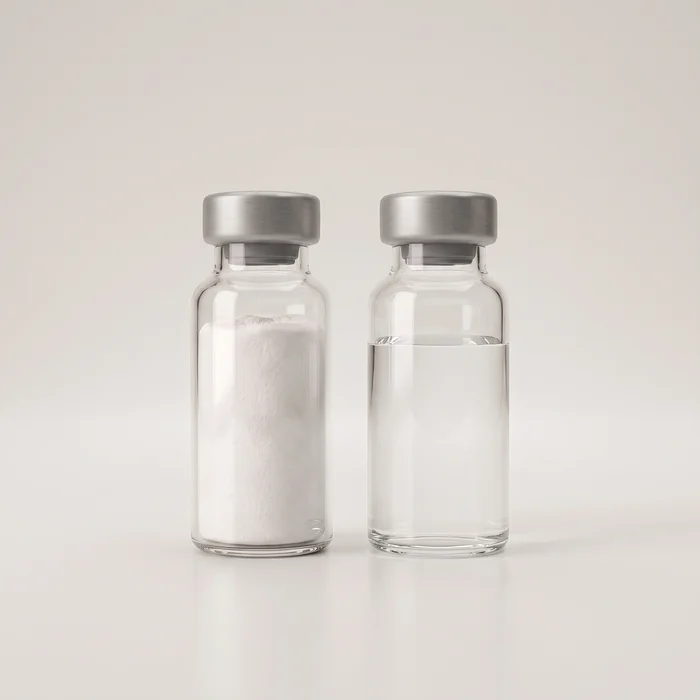
A vial kit is the traditional format. The peptide arrives as a lyophilized powder in a sealed glass vial, and the diluent comes separately, in its own bottle, or is sourced by the laboratory.
To prepare it, the vial is reconstituted: diluent is measured out, passed through the vial's rubber septum, and the powder is left to dissolve. The researcher chooses the diluent volume, which sets the concentration.
What it does well. The peptide stays dry until the moment of reconstitution, which is the main stability advantage of lyophilized material. The format is familiar and flexible: the concentration can be chosen to suit the protocol.
What it asks of you. Every vial needs a transfer step, a volume measurement and a concentration calculation. Each of those is a place for variation between preparations. The septum is punctured, and the diluent is handled in the open air of the lab before it reaches the vial.
Format two: the pre-filled pen
A pre-filled pen arrives with the peptide already in solution inside the cartridge. It is ready on arrival, which makes it the simplest to handle.
What it does well. No reconstitution step, no transfer, and a concentration set at the fill.
What it gives up. The peptide has been in liquid since the day the pen was filled. Peptides generally break down faster in solution than dry, so the age of the solution starts at the fill date, not when the pen is opened. A pen in solution has to stay cold all the way to the bench, and heat during transit leaves no visible sign. From the outside you cannot tell how long the contents have been sitting mixed.
Format three: the dual-chamber pen
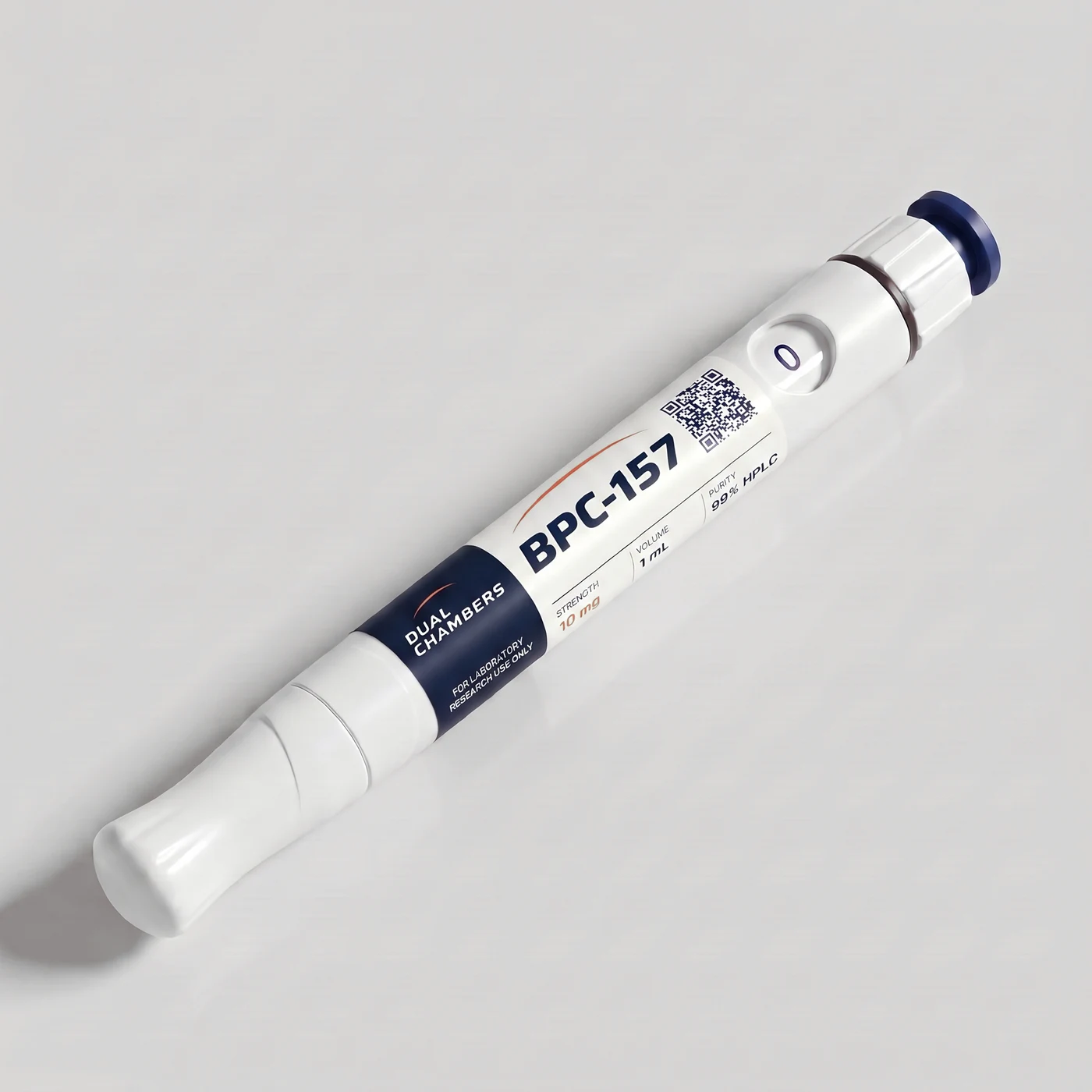
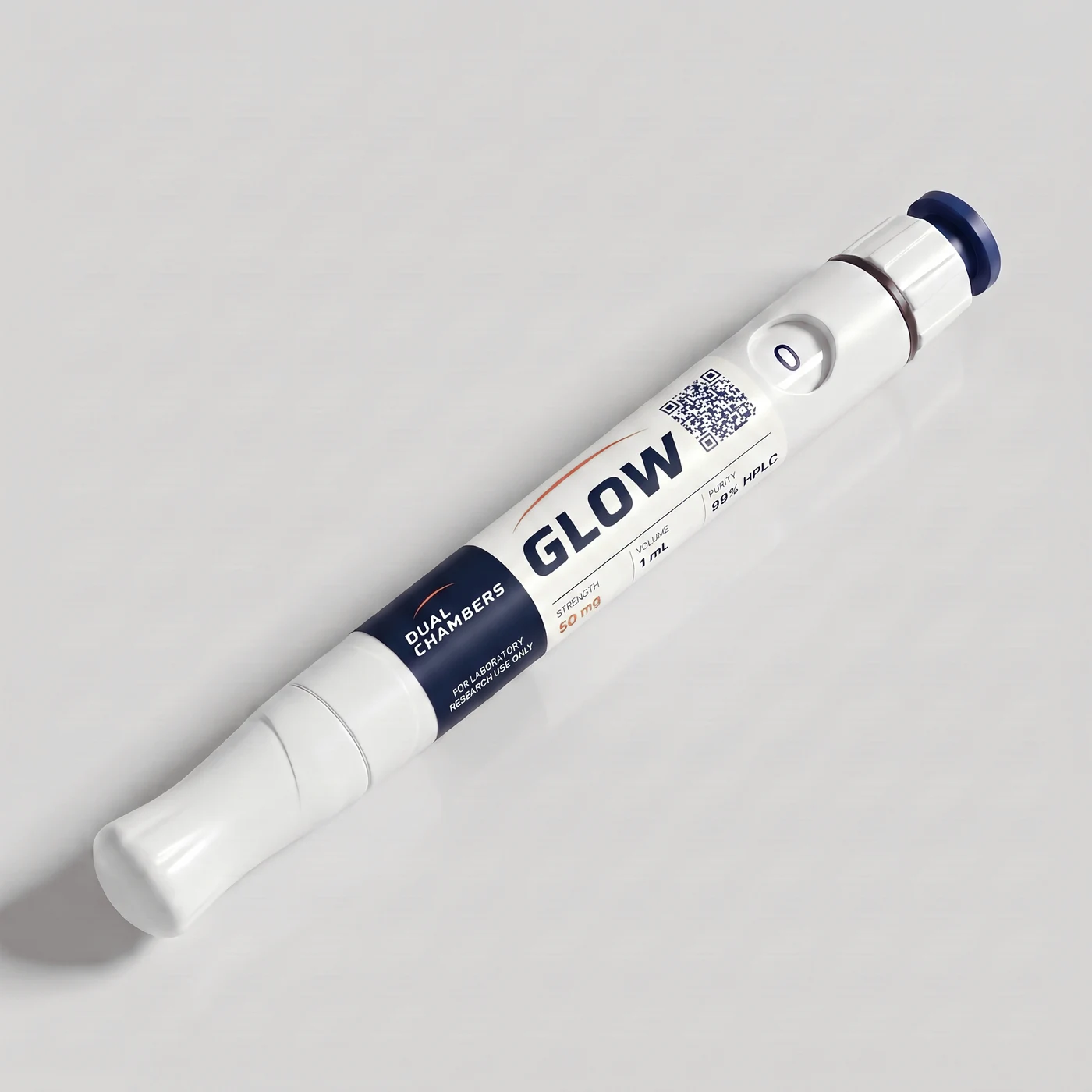
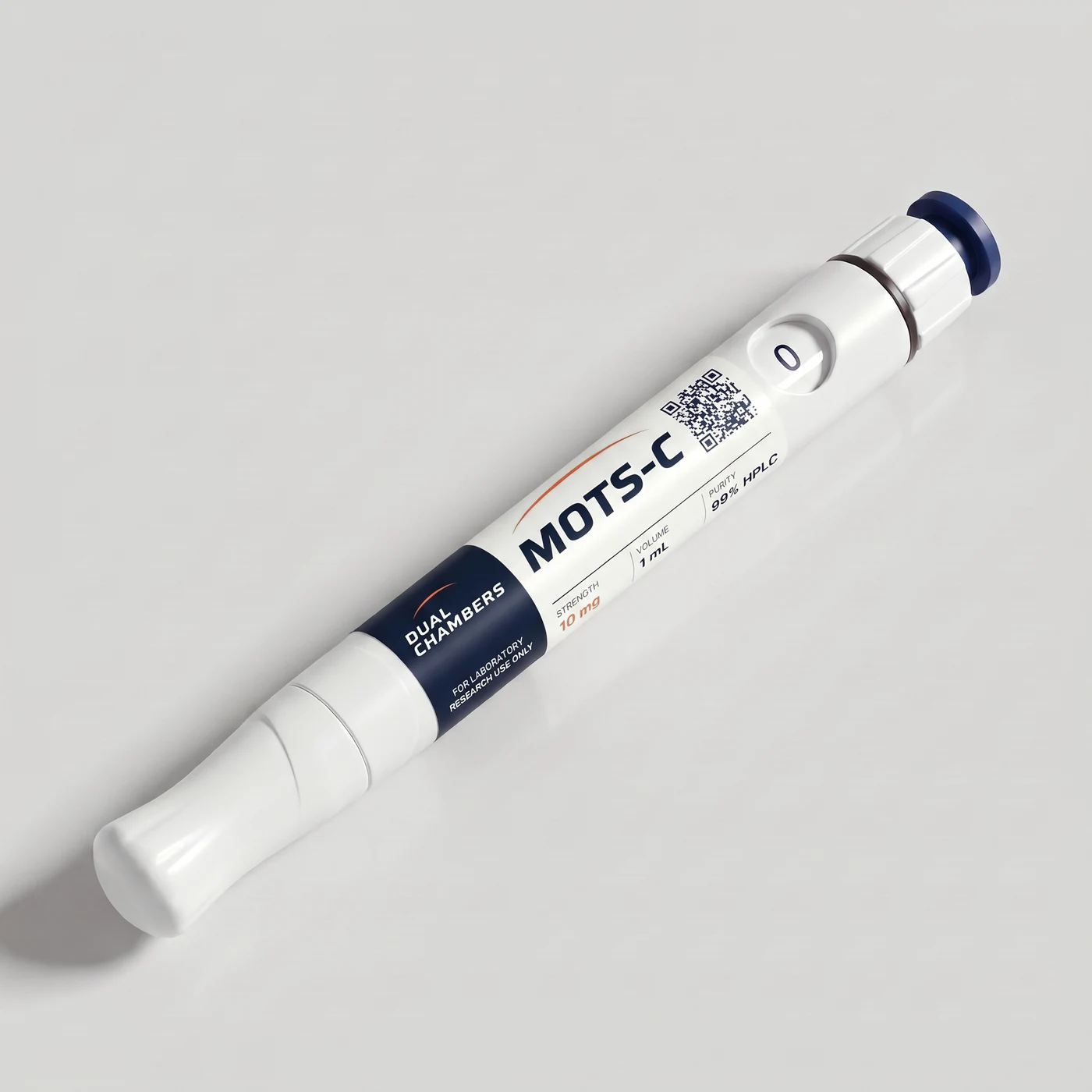
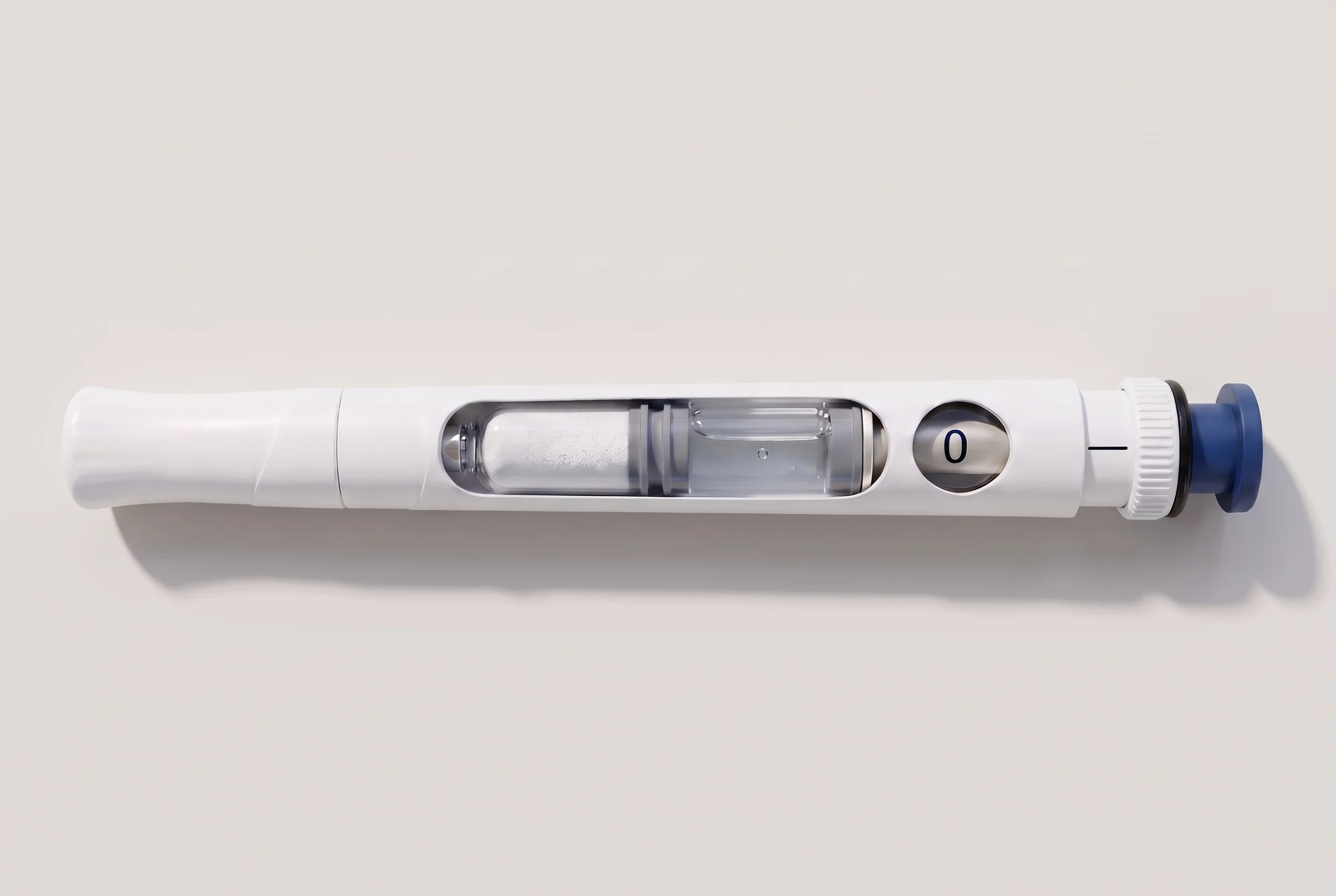
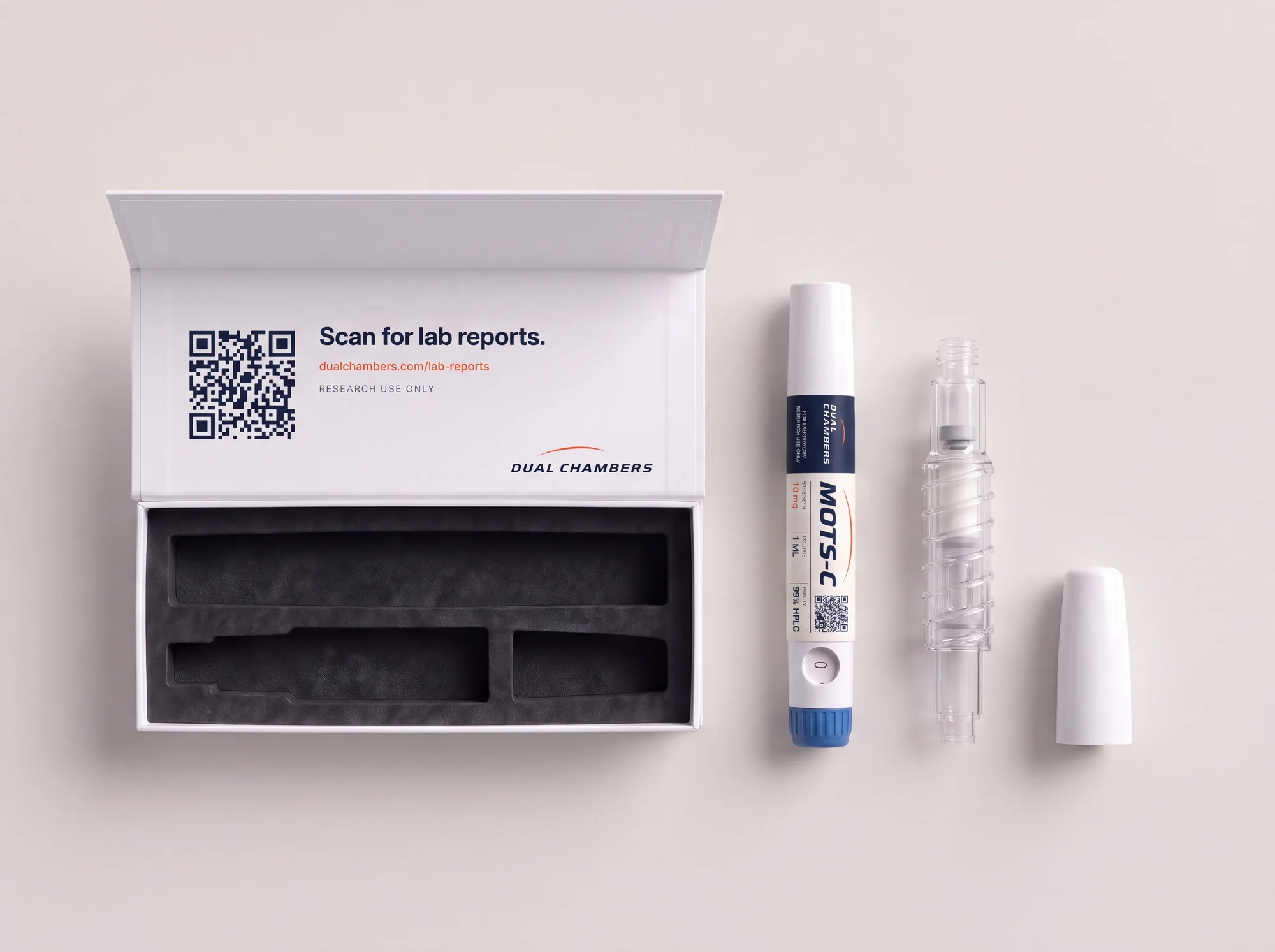
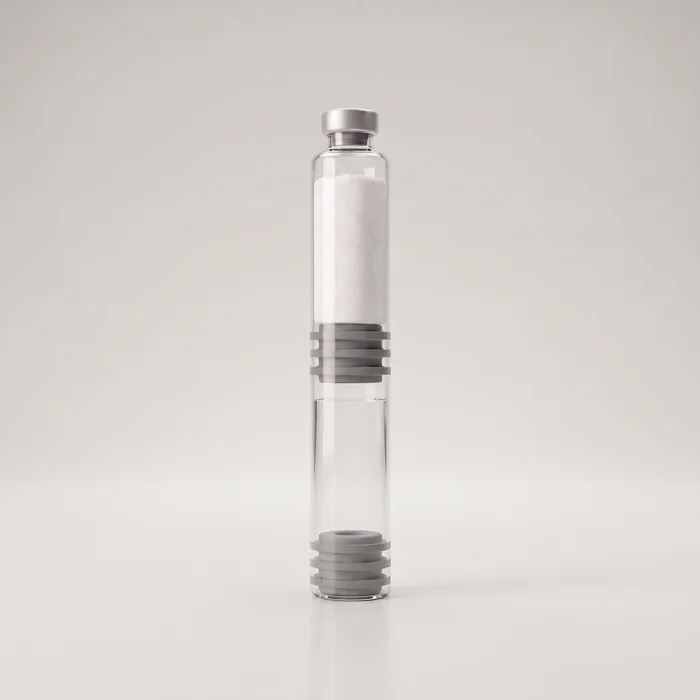
A dual-chamber pen puts the dry peptide and its sterile water in two chambers of one cartridge, separated by a bypass stopper. Twisting the pen pushes the water around the stopper and into the powder, inside the sealed cartridge. The details are in how a dual-chamber peptide pen works.
What it does well. It keeps the stability advantage of the vial kit (the peptide stays dry until use) and the convenience of the pre-filled pen (no transfer, a concentration set at the fill). The diluent is part of the device, and the mixing happens without opening anything to the air.
What it asks of you. The concentration is fixed by the fill. A Dual Chambers pen is 1 mL once mixed, so a protocol that calls for a different concentration is better served by a vial. Once twisted, the pen is a mixed solution and is stored at 2 to 8 °C like any other.
Side by side
| Point of comparison | Vial kit | Pre-filled pen | Dual chamber |
|---|---|---|---|
| Peptide stays dry until use | Yes | No | Yes |
| Diluent included in the device | No | Yes, already mixed | Yes, sealed separately |
| Separate transfer step needed | Yes | No | No |
| Mixed without opening to the air | No | Mixed at the fill | Yes |
| Concentration set at fill | No, chosen at the bench | Yes | Yes |
| Age of the solution starts | At reconstitution | At the fill date | At the twist |
| Storage before use | Per the vial label | Cold, throughout | Dry, out of light, not frozen |
General comparison of formats. Not a claim about any specific competing product, and storage for any product is whatever its own label states.
Choosing between them
The right format depends on what the study needs to control.
- If the protocol needs a concentration of its own, a vial kit lets you choose it. Expect to document every reconstitution so preparations can be compared.
- If consistency between preparations matters most, a format with the concentration set at the fill removes the measuring step from the bench. Of the two that do this, the dual chamber is the one that keeps the peptide dry until you need it.
- If you want fewer handling steps, both pen formats remove the transfer step. The difference is when the peptide goes into solution: at the factory or at your twist.
Whatever the format, check the lot
A format does not tell you what is in the container. That comes from the lot's lab report: identity, purity against the specification, and an endotoxin screen, each tied to a lot number that matches the one on your box. Dual Chambers publishes its lab reports on the lab reports page as they are released, and our guide to reading a peptide lab report covers what to look for in any certificate, from any supplier.
Common questions
Is a dual-chamber pen the same as a pre-filled pen?
No. A pre-filled pen holds the peptide in solution from the day it is filled. A dual-chamber pen holds it dry, and it only goes into solution when you twist the pen.
Can I change the concentration of a dual-chamber pen?
No. The peptide and the water are both measured at the fill, so the concentration is fixed. That is the point of the format: every pen of the same strength matches.
Does a dual-chamber pen need to be refrigerated before the twist?
The unmixed pen is stored dry, out of direct light, and not frozen. After the twist it is kept at 2 to 8 °C. See storing a dual-chamber pen.
Dual Chambers products are not for human or veterinary use, and nothing in this article is an instruction for use in people or animals. Questions about a pen or a lab report: support@dualchambers.com.