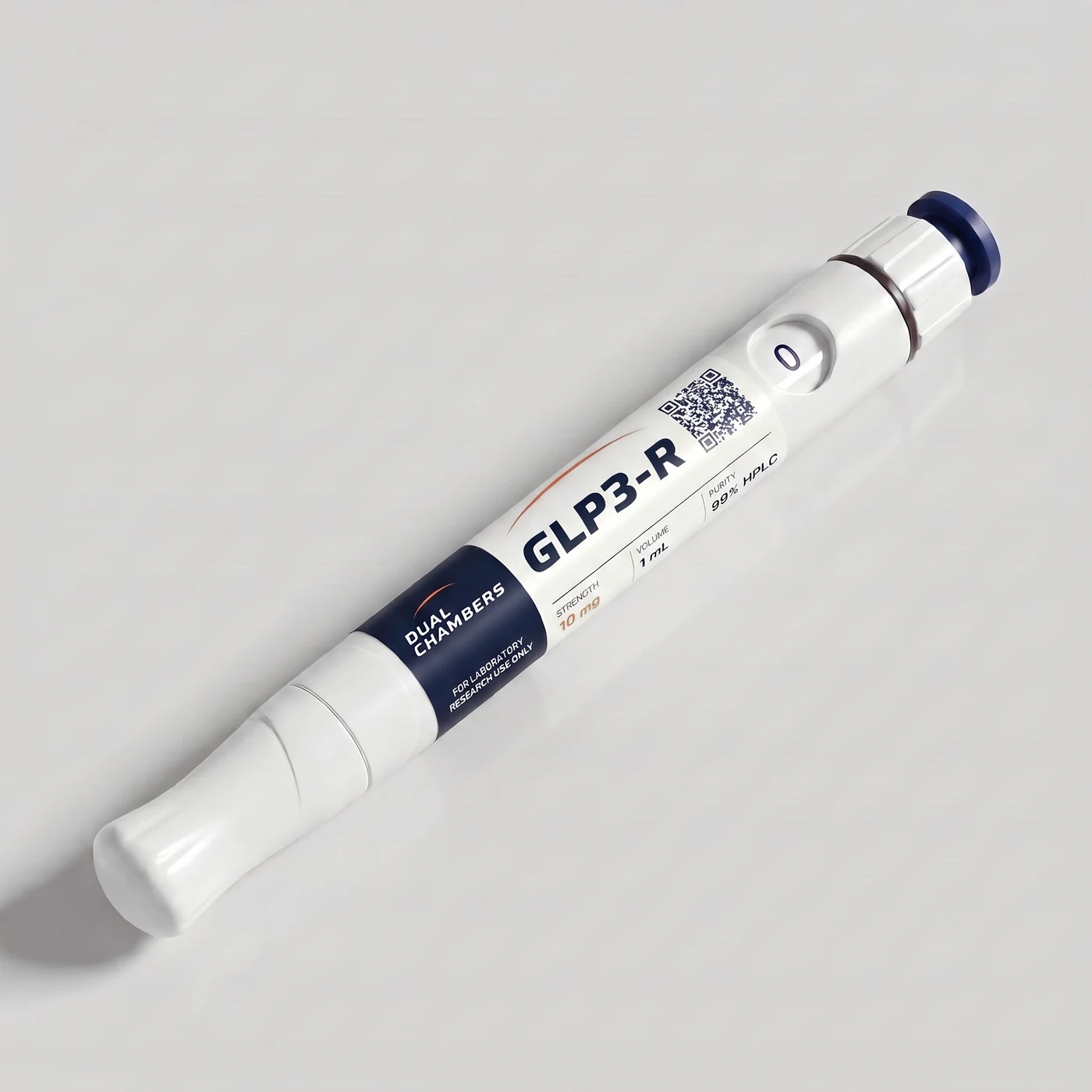
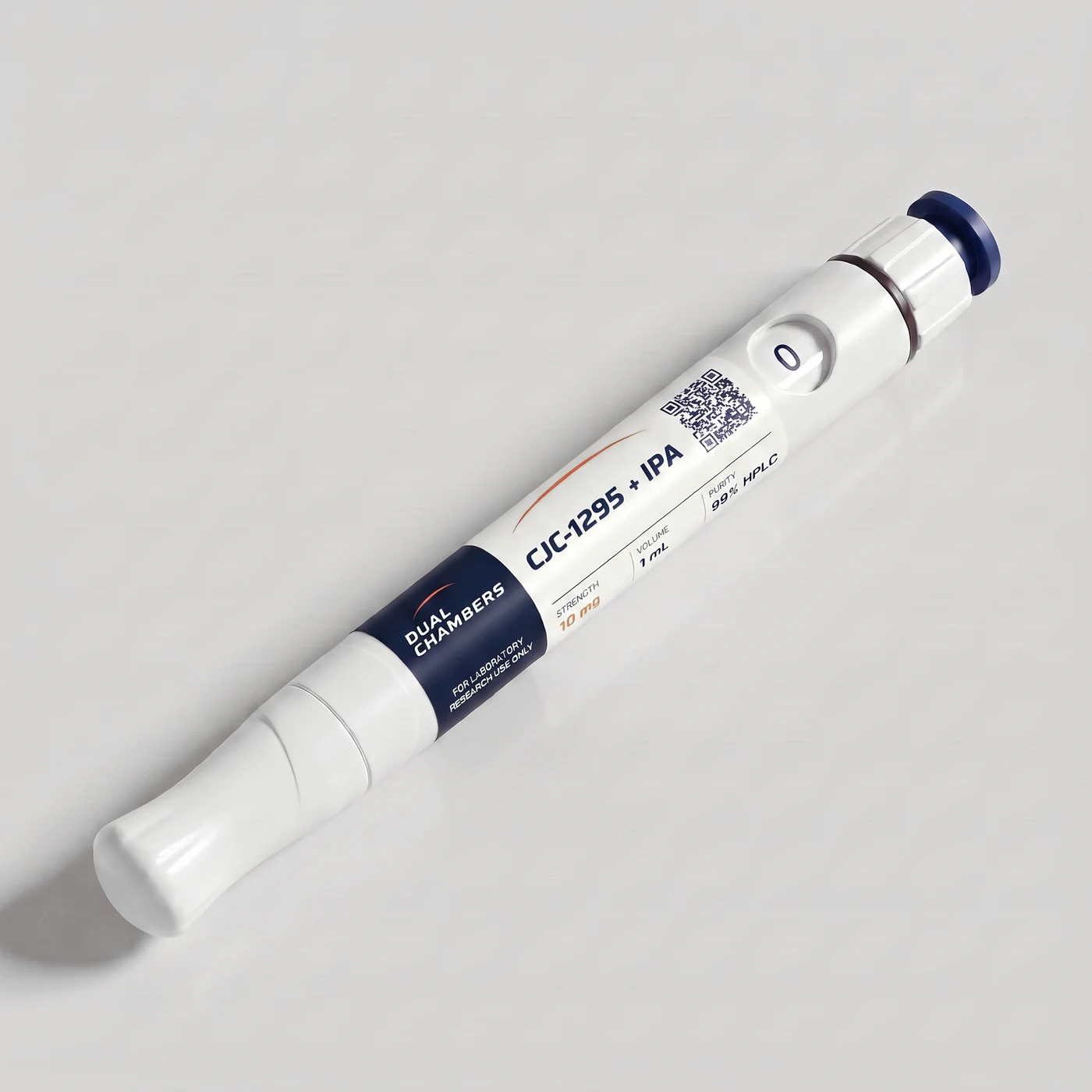
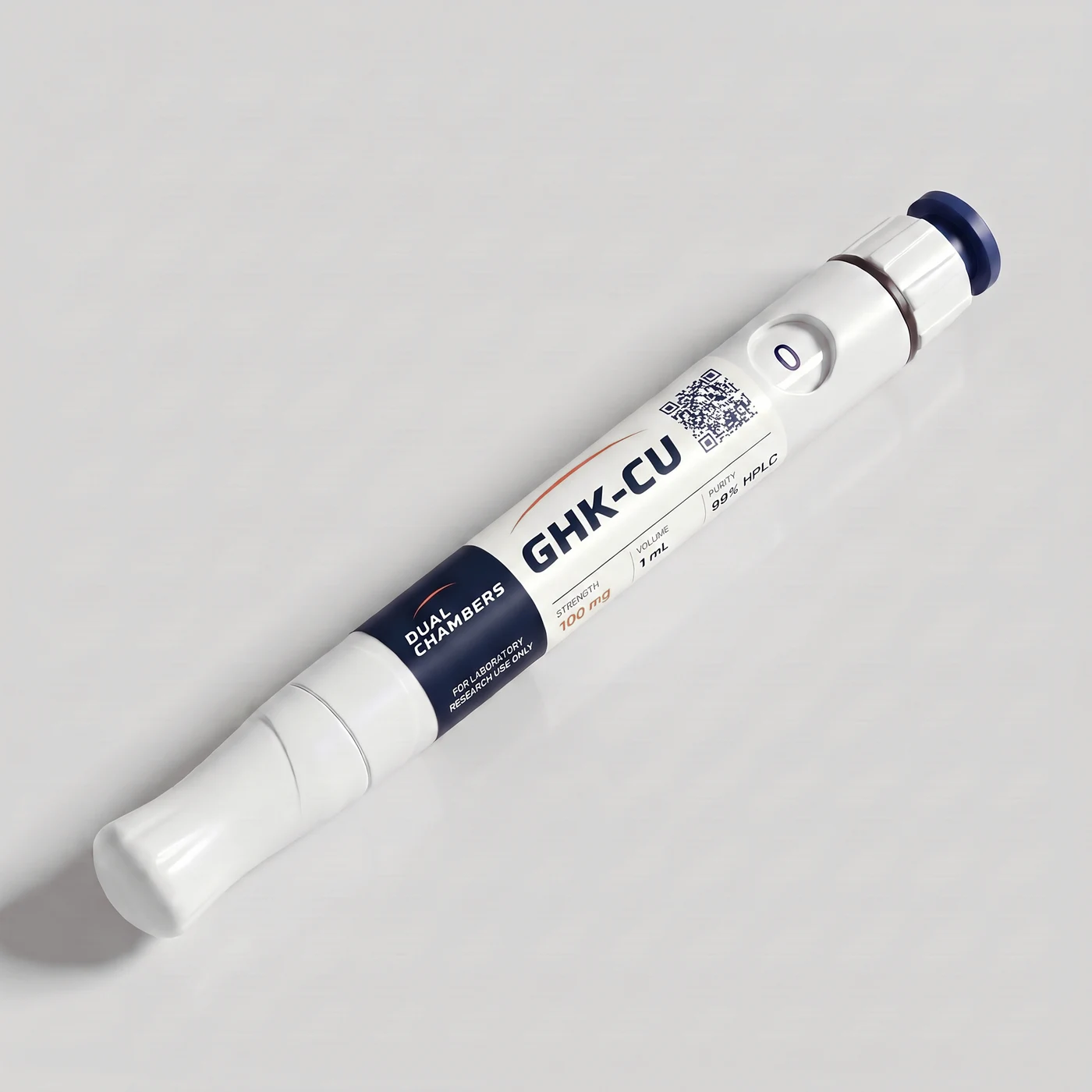
Storing a dual-chamber pen before and after the twist
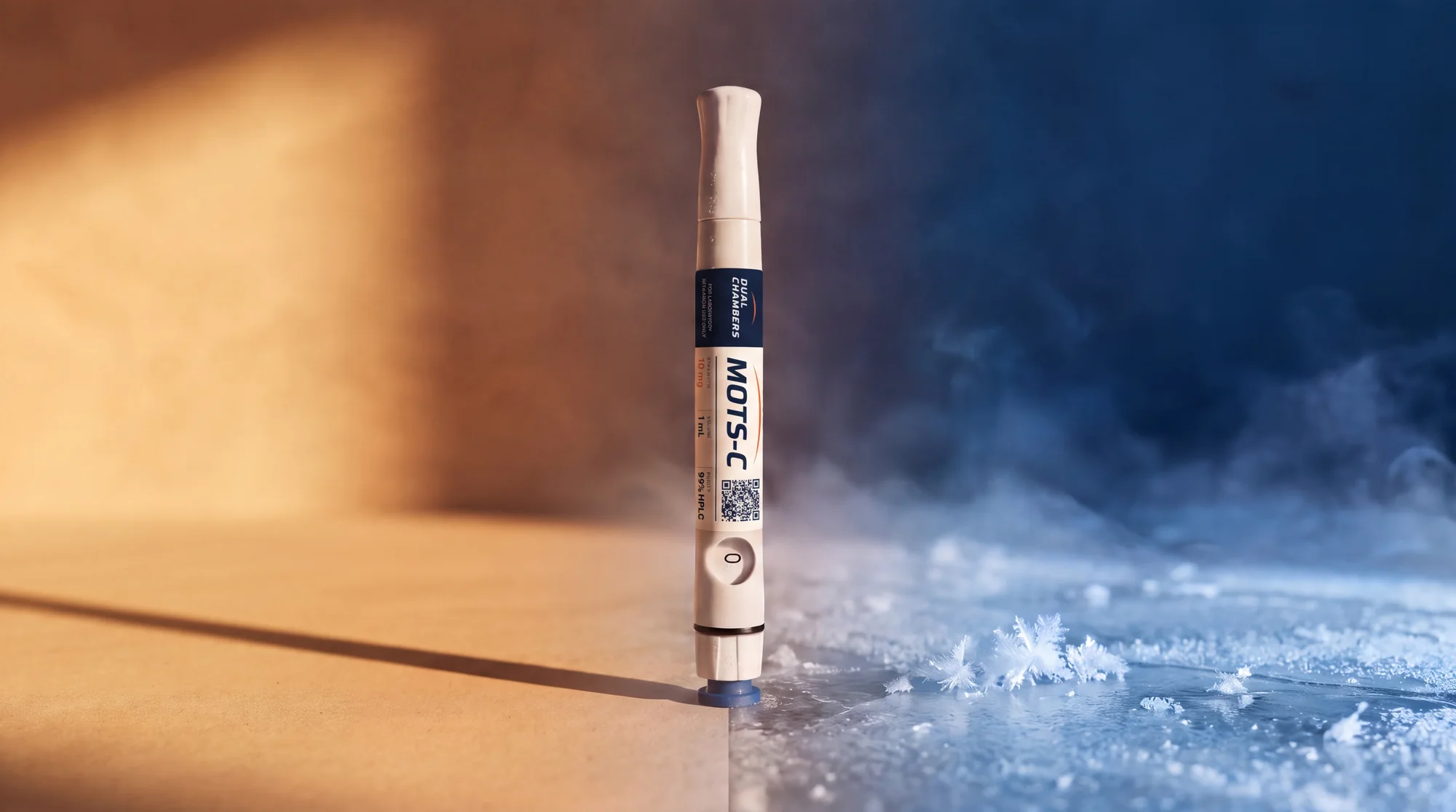
A dual-chamber pen has two lives: before the twist, when the peptide is dry, and after it, when the peptide is in solution. Each has its own storage rule, and the twist is the moment you switch from one to the other.
The two rules
| Before the twist (unmixed) | After the twist (mixed) | |
|---|---|---|
| Temperature | Dry, as the carton directs. Do not freeze. | 2 to 8 °C, refrigerated. Do not freeze. |
| Light | Out of direct light | Out of direct light |
| State of the peptide | Lyophilized powder | In solution, 1 mL |
| Where | In its box | In the refrigerator, in its box or a closed container |
The rest of this article explains the reasoning, so the rules are easy to apply in a real lab with real refrigerators, benches and deliveries.
Before the twist: keep it dry, dark and unfrozen
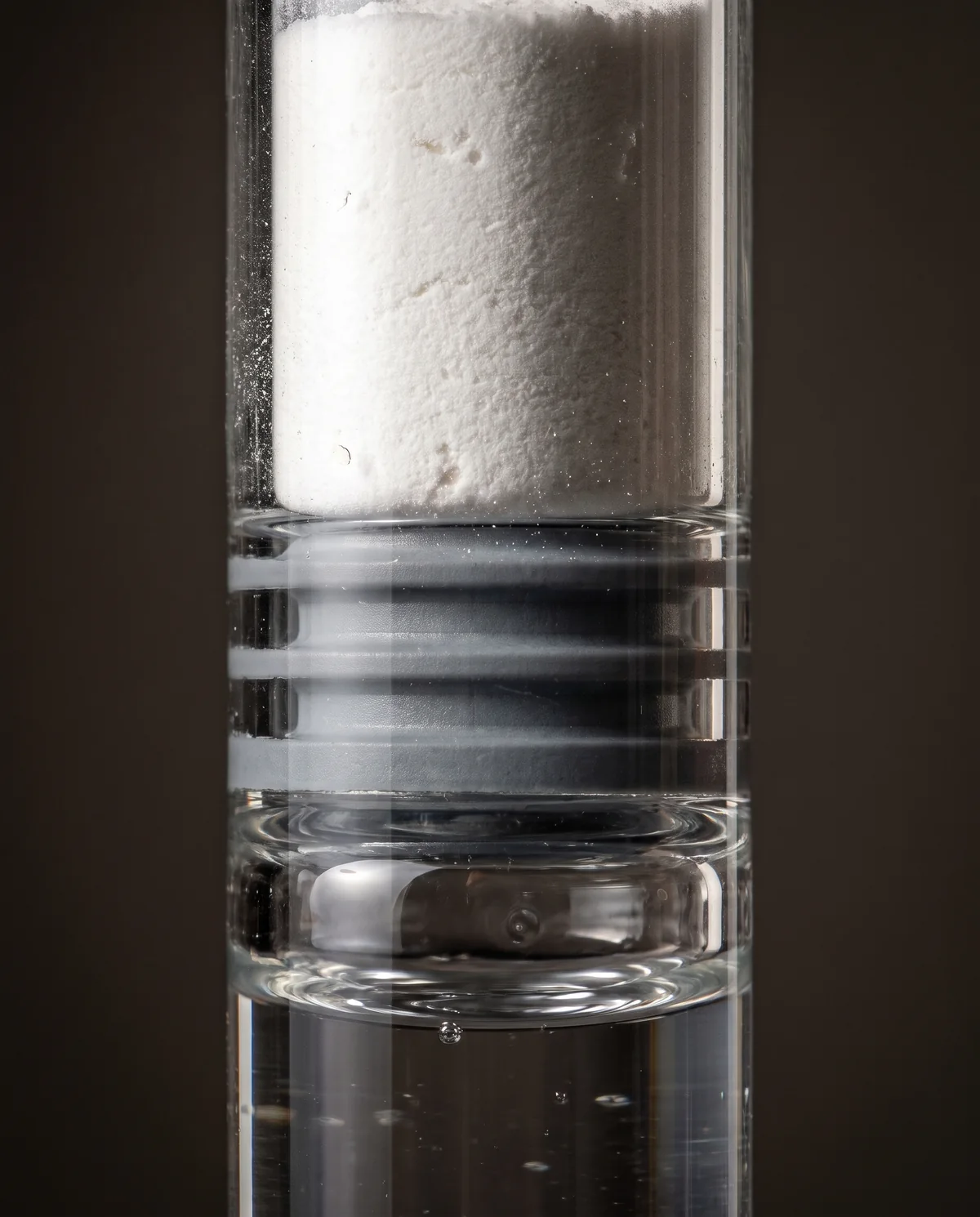
An unmixed pen holds the peptide as a freeze-dried solid in the front chamber, sealed away from the water in the rear chamber. Dry material is generally the more stable state for a peptide, which is why the pen is built this way. Storage before the twist is about protecting that dry state.
- Dry. The cartridge is sealed, but keep the pen in its box and away from damp places, condensation and spills.
- Out of direct light. Light can contribute to the degradation of some peptides, and the cartridge holder is clear. The box is the simplest light shield, so leave the pen in it until you need it.
- Do not freeze. The rear chamber holds water. Freezing water expands, which puts the stoppers and the glass under stress and can compromise the seal between the chambers. An unmixed pen should never go in a freezer.
Heat is worth thinking about too. Keep the pen away from radiators, windowsills, equipment exhausts and hot vehicles, and follow the directions printed on the carton for your pen.
After the twist: refrigerate at 2 to 8 °C
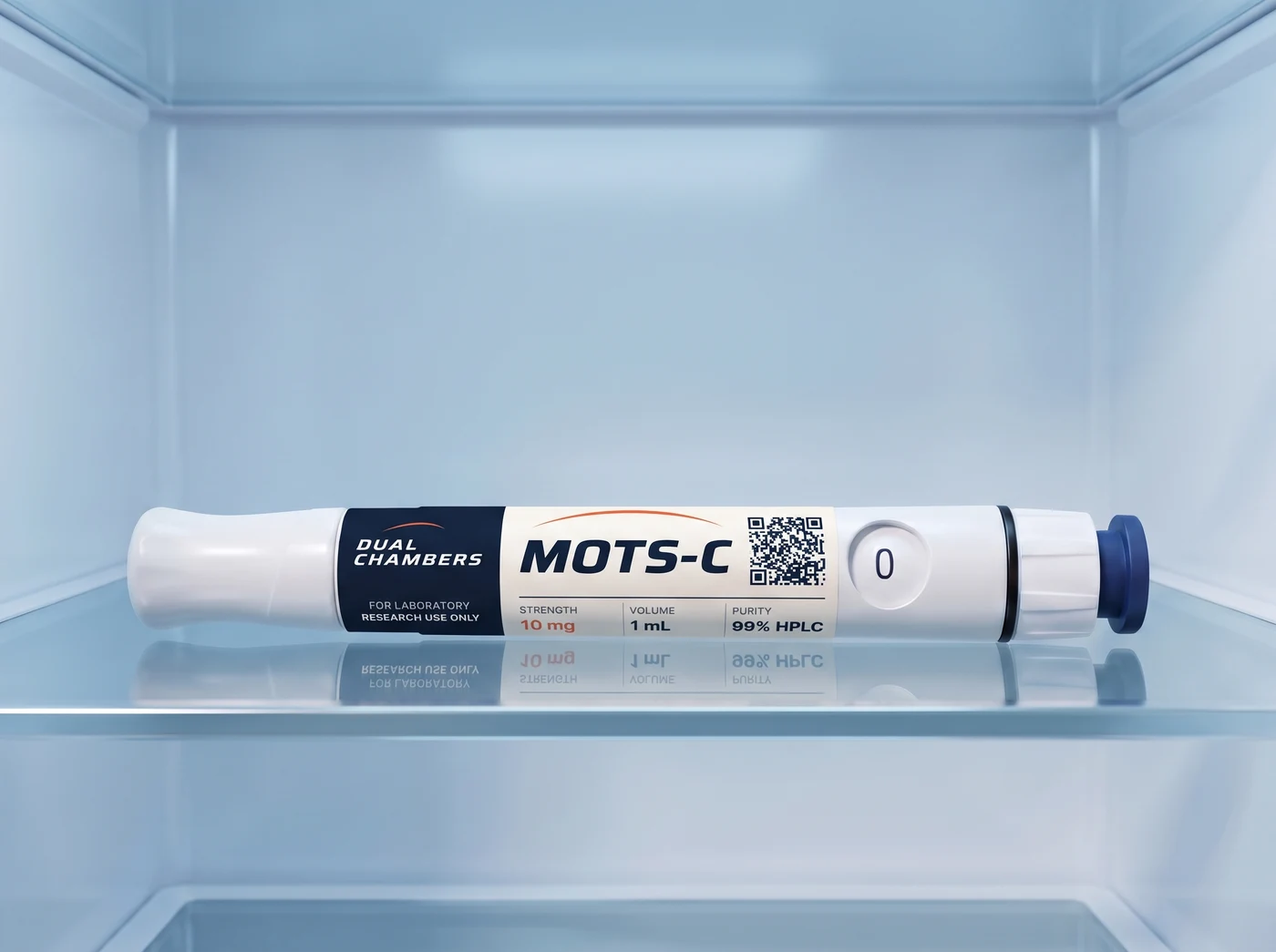
Once the water crosses the bypass, the peptide is in solution. In water, peptides are exposed to slow chemical changes such as hydrolysis and oxidation, and those generally run faster at higher temperatures. Refrigeration slows them. That is why a mixed pen goes straight into the refrigerator, at 2 to 8 °C.
- Refrigerate promptly. Twist the pen when you are ready to work with it, and put it in the refrigerator when you are done.
- Do not freeze it. The freezer is not a colder, better refrigerator. Freezing a peptide solution and thawing it again can promote aggregation, and it stresses the cartridge.
- Mind the coldest spots. Many refrigerators run below freezing near the cooling element or at the back of the top shelf. A middle shelf, away from the back wall, is usually more stable. A thermometer in the refrigerator settles the question.
- Keep it out of the door. The door shelves see the largest temperature swings every time the refrigerator is opened.
- Keep it dark. Leave it in the box or a closed container on the shelf.
When to twist
The twist is one way. Once the water has crossed the bypass it cannot go back, and from that moment the pen follows the mixed rule. The practical advice follows directly: twist a pen only when you are ready to use it in your work, and keep spare pens unmixed until they are needed.
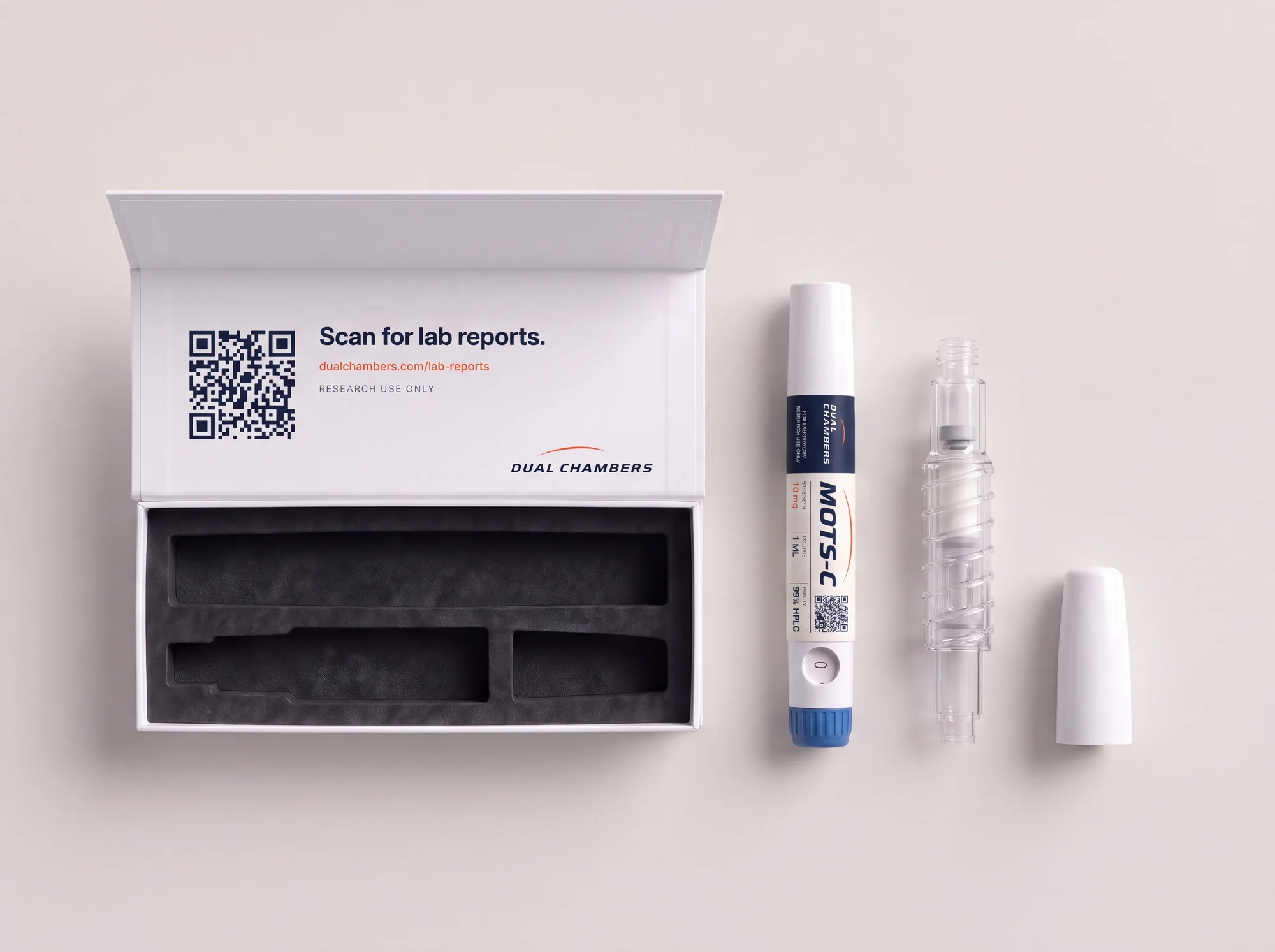
If you are not sure whether a pen has been twisted, look through the clear cartridge holder. In an unmixed pen, the dry peptide is in the front chamber and the water is behind the middle stopper, clearly separate. In a mixed pen, the front chamber holds the solution and the rear chamber is empty. The full sequence is in how a dual-chamber peptide pen works.
Receiving a delivery
Dual Chambers orders placed before 2 PM ET on business days ship the same day from the USA, in discreet packaging with no product name on the outside. When a box arrives:
- Bring it inside and open it rather than leaving it in a mailbox or a hot vehicle.
- Check that each cartridge is intact and unmixed, with the powder and the water still separate.
- Keep each pen in its own box. The lot number on the box is how you find the matching lab report.
- Store the unmixed pens dry, out of direct light, and not frozen, until you twist them.
Labelling and records
Good storage is easier with a simple record. For each pen, note the lot number from the box and the date and time you twisted it. Write the twist date on the box or on a label on the pen body. That way anyone opening the refrigerator knows which pens are mixed and how long they have been in solution, and any result can be traced back to a lot and its report.
Common questions
Where should unmixed pens be kept?
Follow the carton. The rule for an unmixed pen is dry, out of direct light, and not frozen. Wherever you keep it, it must never reach freezing, and it should stay in its box.
Can a mixed pen be frozen to keep it longer?
No. Do not freeze a mixed pen. Keep it at 2 to 8 °C.
What if a pen arrives already mixed?
That should not happen with an intact pen. Email support@dualchambers.com with your order number and the lot number from the box.
Dual Chambers products are not for human or veterinary use, and nothing in this article is an instruction for use in people or animals. Questions about a pen or a lab report: support@dualchambers.com.