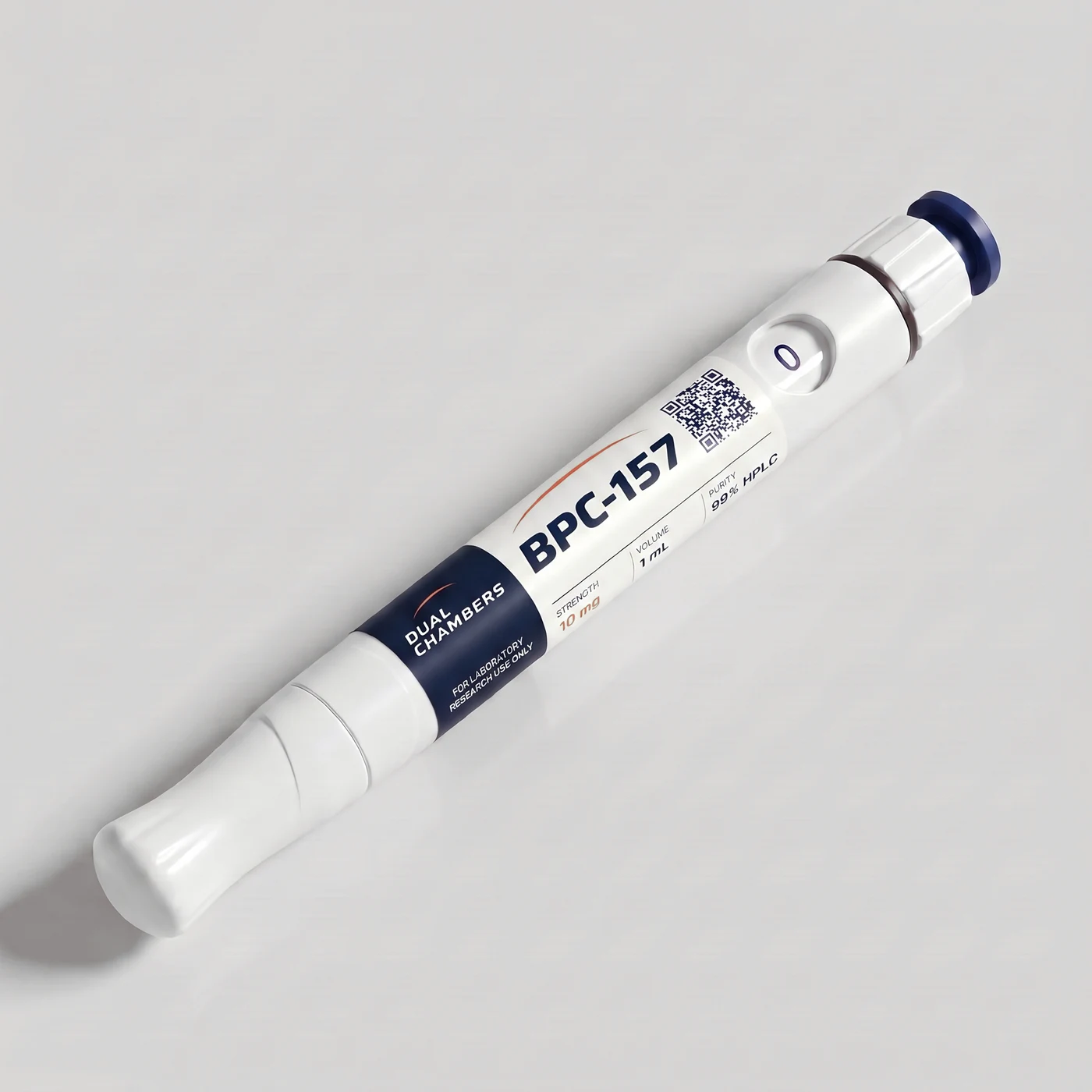
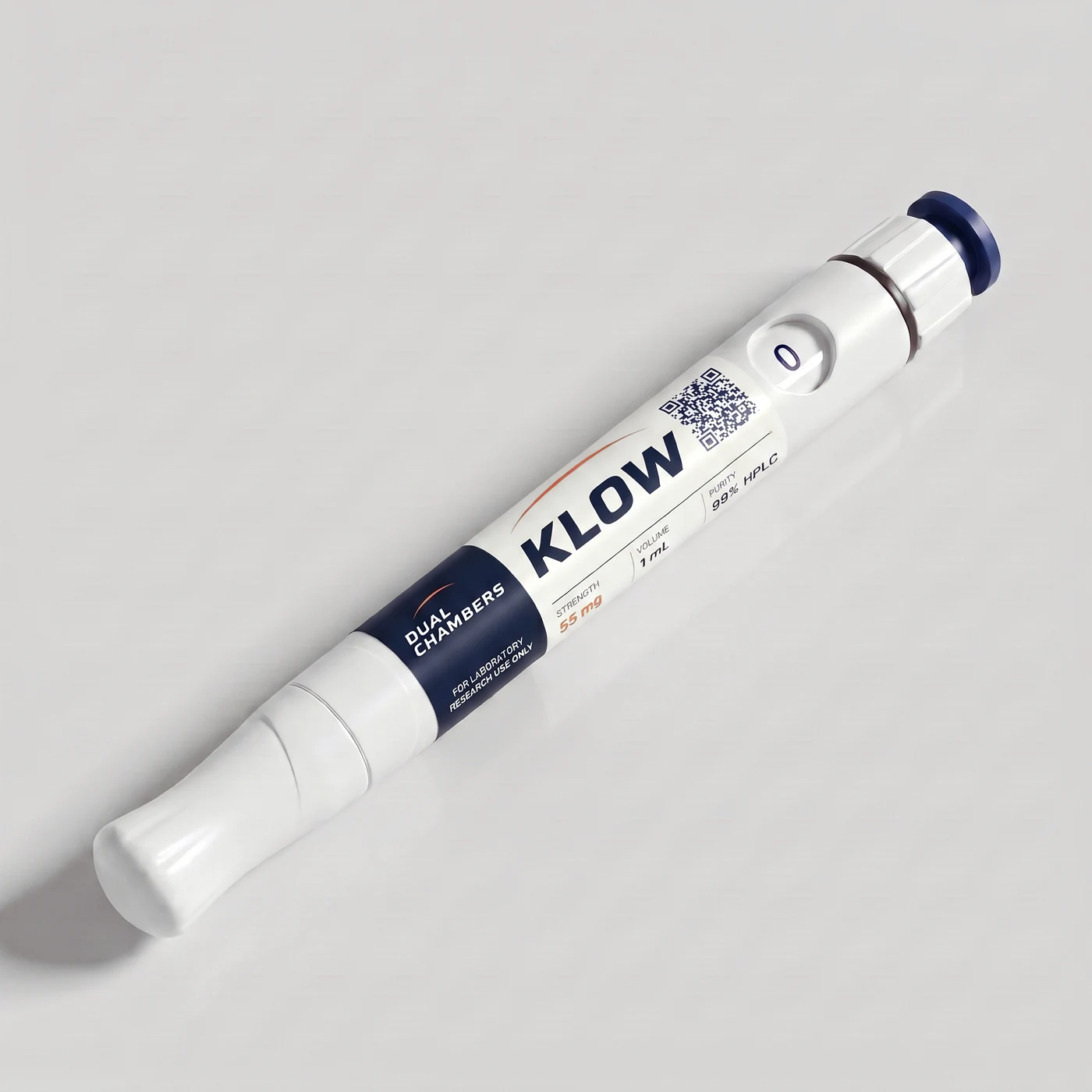
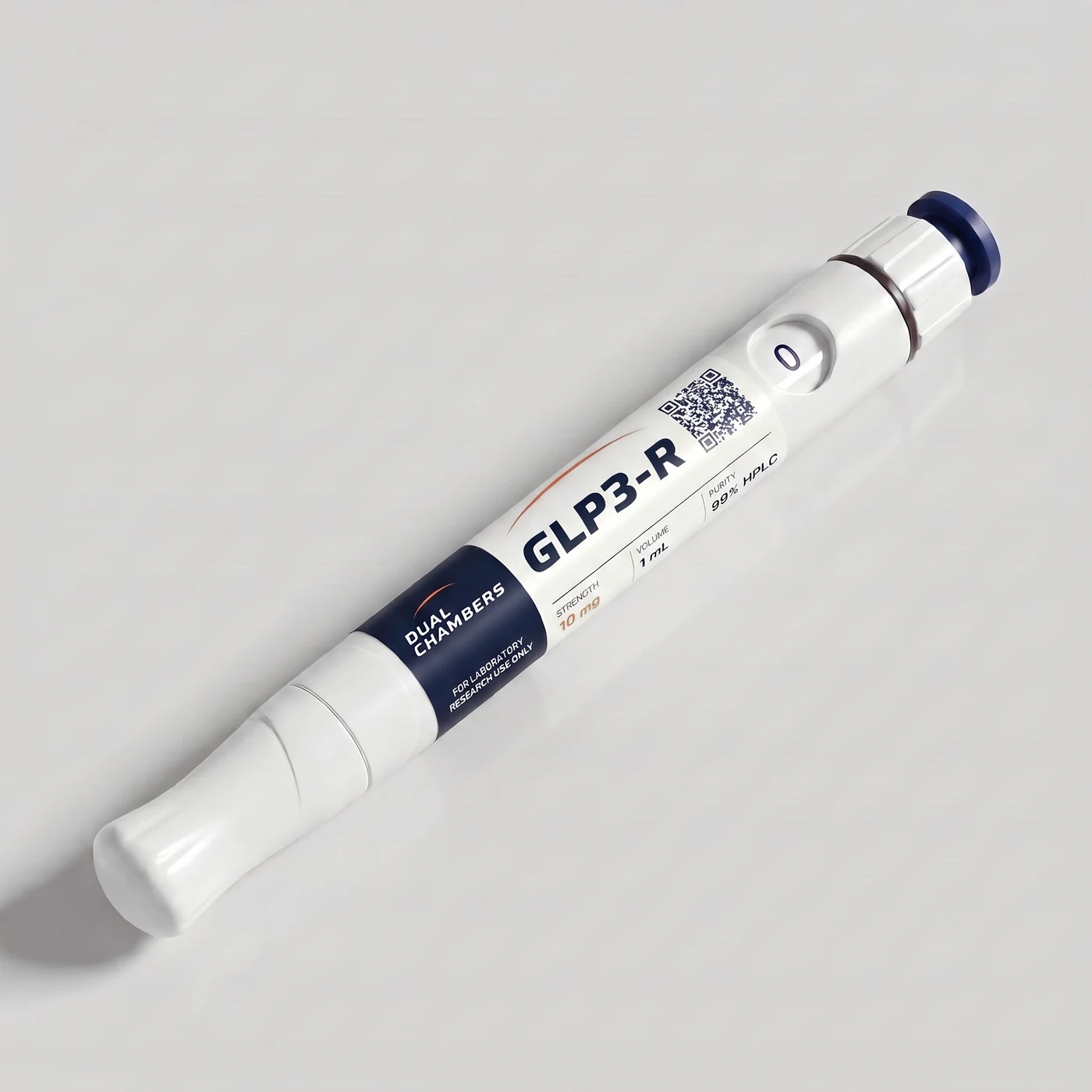
How a dual-chamber peptide pen works
A dual-chamber pen holds a freeze-dried peptide and its water in the same glass cartridge, kept apart until you decide to combine them. This guide walks through the parts of the cartridge, what happens during the twist, and why the format exists at all.
The short version: sealed, twist, ready
Every Dual Chambers pen moves through three states, in one direction only.
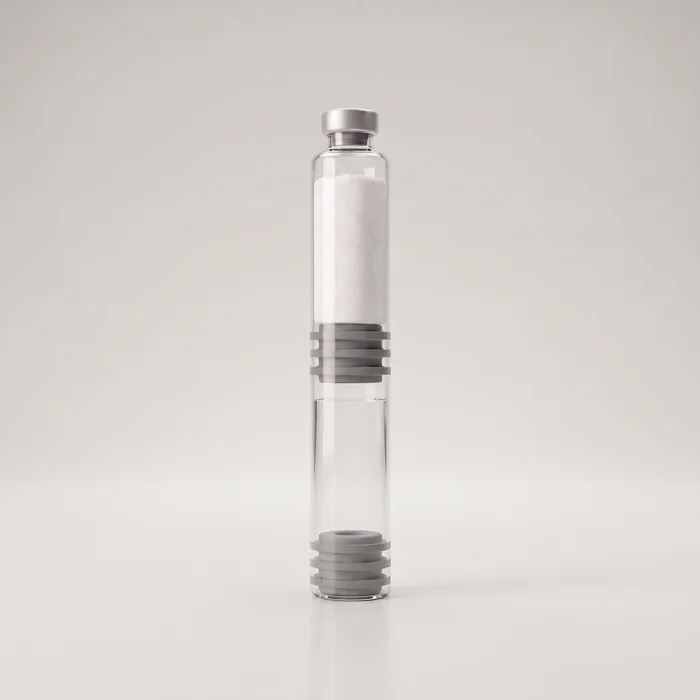
- Sealed. The peptide sits dry in the front chamber. Sterile water sits in the rear chamber. A rubber stopper between them keeps the two apart.
- Twist. Turning the knob pushes the water forward. When the stopper reaches the bypass, the water flows around it and into the powder.
- Ready. The peptide is now in solution at the labeled concentration, still inside the sealed cartridge. From this point it is a mixed pen and is stored cold.
That is the whole sequence. The rest of this article explains each part, because knowing why the pen behaves the way it does makes it easier to handle it consistently at the bench.
The parts of the cartridge
The working part of the pen is a single glass cartridge. From front to back it contains:
- The peptide chamber. The front section holds the lyophilized (freeze-dried) peptide as a dry cake or powder. Nothing liquid touches it until the twist.
- The bypass stopper. A rubber stopper sits in the middle of the cartridge and seals the two chambers from each other.
- The bypass. Part of the cartridge wall is shaped to leave a channel around the stopper once the stopper has moved into that section. Before the twist, the stopper sits behind the channel and the seal is complete.
- The water chamber. Behind the middle stopper is the sterile water, already measured and sealed in.
- The plunger. A rear stopper closes the back of the water chamber. The pen mechanism pushes on it.
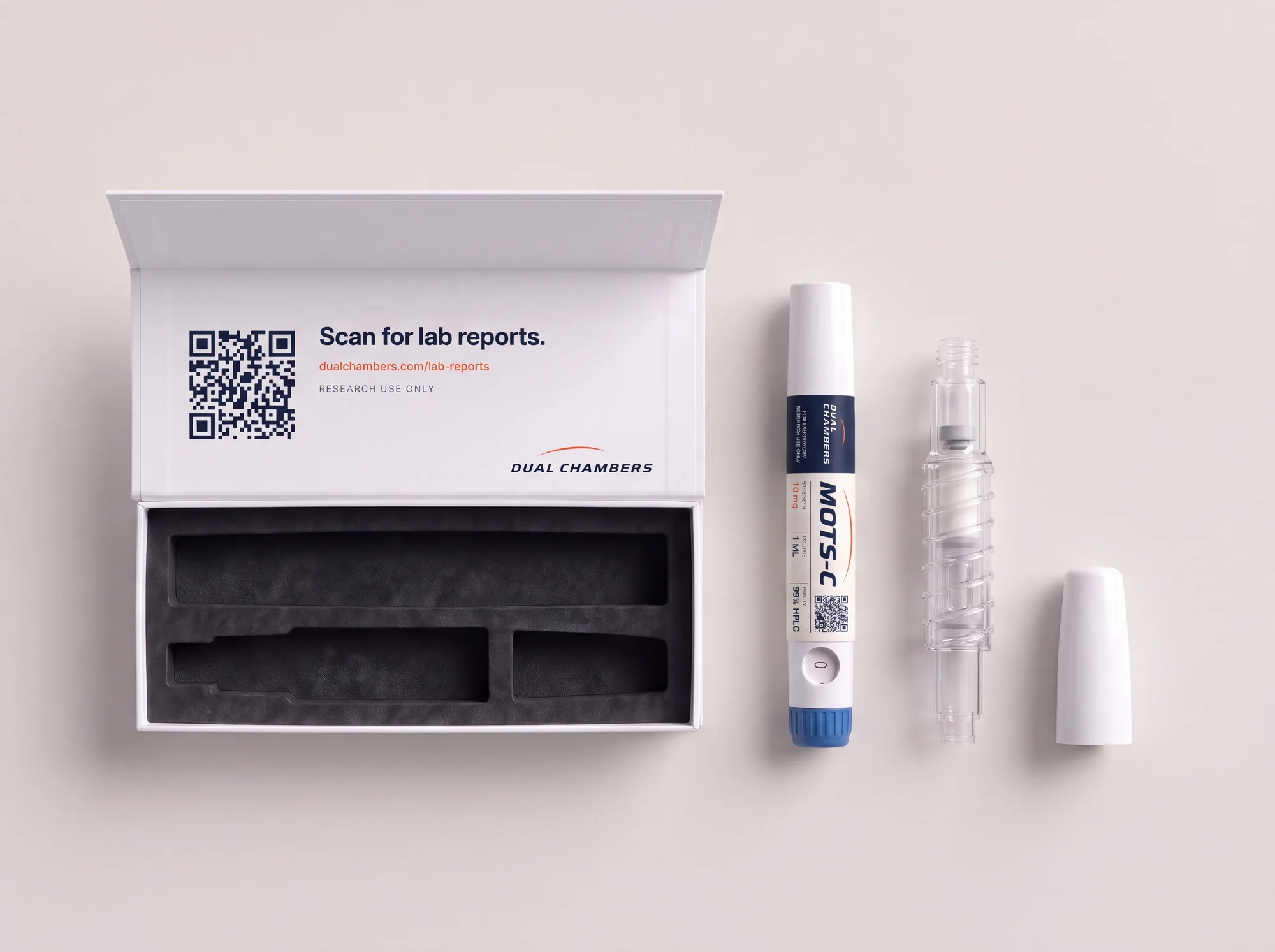
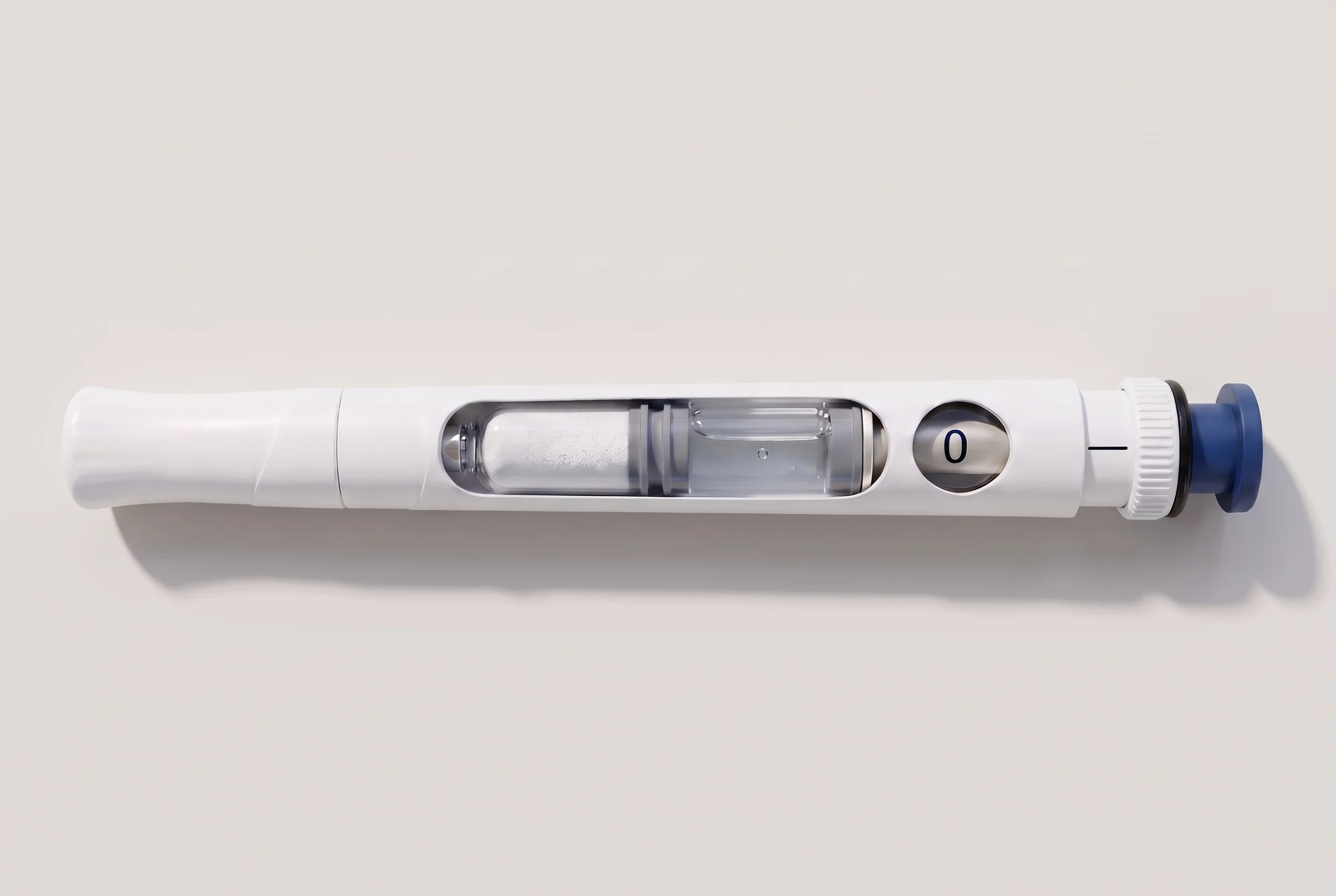
Around the cartridge is the pen itself: a clear cartridge holder so you can see the contents, the pen body with the twist knob, and a cap.
What happens during the twist
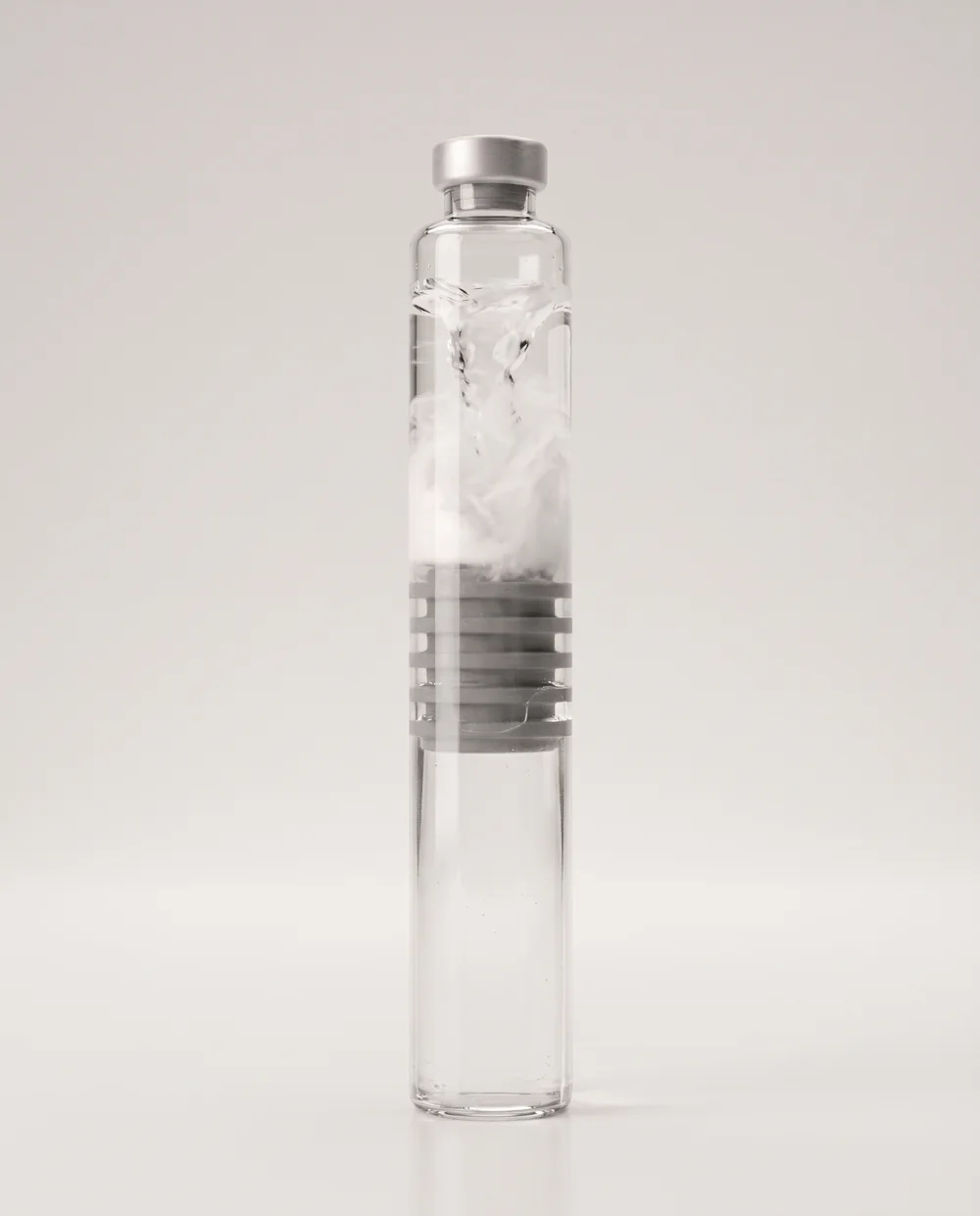
Liquids do not compress, so when the knob pushes the rear plunger forward, the water in the rear chamber has to move, and it pushes the middle stopper forward with it. The two stoppers travel together until the middle stopper arrives at the bypass section of the cartridge wall.
At that point the water has a path. It flows through the channel around the stopper and into the front chamber, where it meets the dry peptide. As the plunger keeps moving, the water chamber empties until the plunger reaches the middle stopper. All of the water is now in the front chamber with the peptide.
Two things never happen in this sequence: the cartridge is never opened, and nothing moves liquid from one container to another by hand. The water crosses from one chamber to the other inside the same sealed glass.
After the twist: dissolving and the labeled concentration
Once the water is in the peptide chamber, the dry peptide dissolves. Lyophilized material generally takes up water quickly because freeze-drying leaves it porous. Gentle handling is the usual laboratory practice for peptide solutions: let the cake dissolve and avoid vigorous shaking, which can foam the solution. Follow the directions on the carton for your pen.
Because the amount of peptide and the amount of water are both set when the cartridge is filled, the concentration after mixing is set too. Every Dual Chambers pen is 1 mL once mixed, so the labeled amount of peptide is in that 1 mL. There is no reconstitution volume to choose and no calculation to repeat for each pen.
Why a peptide is kept dry until the twist
Many peptides are more stable as a dry solid than in solution. In water, peptides can be exposed to hydrolysis, oxidation and aggregation over time, and the rate depends on the sequence, the temperature and the solution. Freeze-drying removes the water so the material can be held in a more stable state until it is needed.
A dual-chamber cartridge keeps that advantage without making you do the mixing in a separate step. The peptide stays dry through storage and shipping, and the clock that matters for a peptide in solution starts when you twist the pen, not when the pen was filled. For more on the reasoning behind the design, see why the water is already in the pen.
Storage before and after
The two states of the pen are stored differently:
- Unmixed: keep it dry, out of direct light, and do not freeze it.
- Mixed: keep it at 2 to 8 °C, refrigerated, and do not freeze it.
The full detail is in storing a dual-chamber pen before and after the twist.
Where the lab report fits
Each box carries a QR code inside the lid that opens the Dual Chambers lab reports page. Dual Chambers pens are tested by an independent laboratory, with identity confirmed by mass spectrometry and an endotoxin screen. Reports are published on that page as they are released. Keep the box: the lot number on it is how you match your pen to its report. Our guide to reading a peptide lab report explains what to look for.
Common questions
Can a pen be un-mixed?
No. Once the water has crossed the bypass, the peptide is in solution. Twist a pen only when you are ready to use it in your work.
Is anything added before the twist?
No. The sterile water is already in the rear chamber. There is nothing to draw up, measure or add to the cartridge.
How do I know a pen has not been mixed?
Look through the clear cartridge holder. In an unmixed pen the dry peptide sits in the front chamber and the water sits behind the middle stopper, with the two clearly separate.
Dual Chambers products are not for human or veterinary use, and nothing in this article is an instruction for use in people or animals. Questions about a pen or a lab report: support@dualchambers.com.