Fixed-ratio blends: KLOW and GLOW
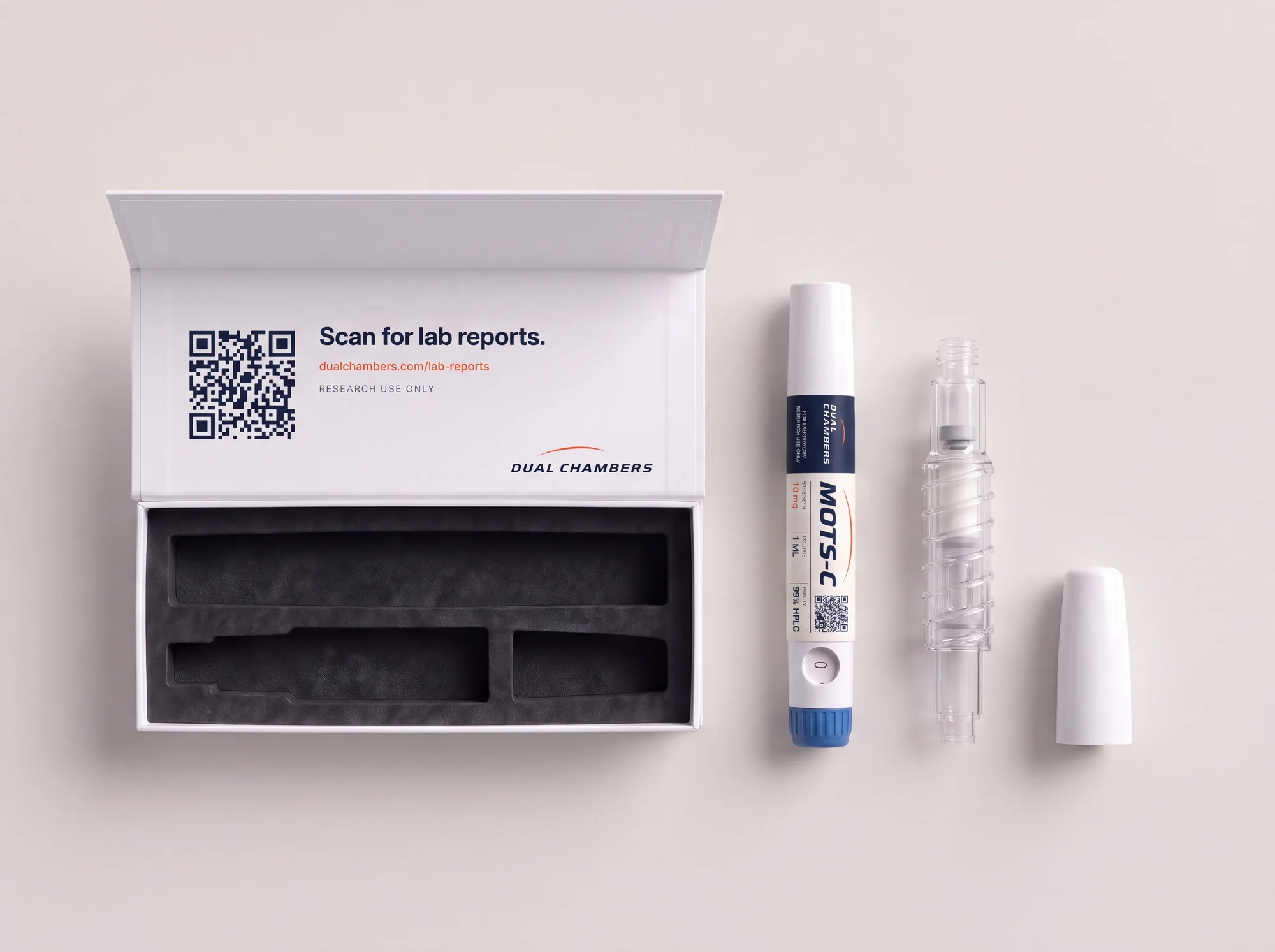
Some study designs run several research peptides together rather than one at a time. A fixed-ratio blend puts them in one cartridge, at proportions set when the pen is filled. This article explains why a blend is filled that way, what is in KLOW and GLOW, and what a blend asks of testing.
What "fixed ratio" means
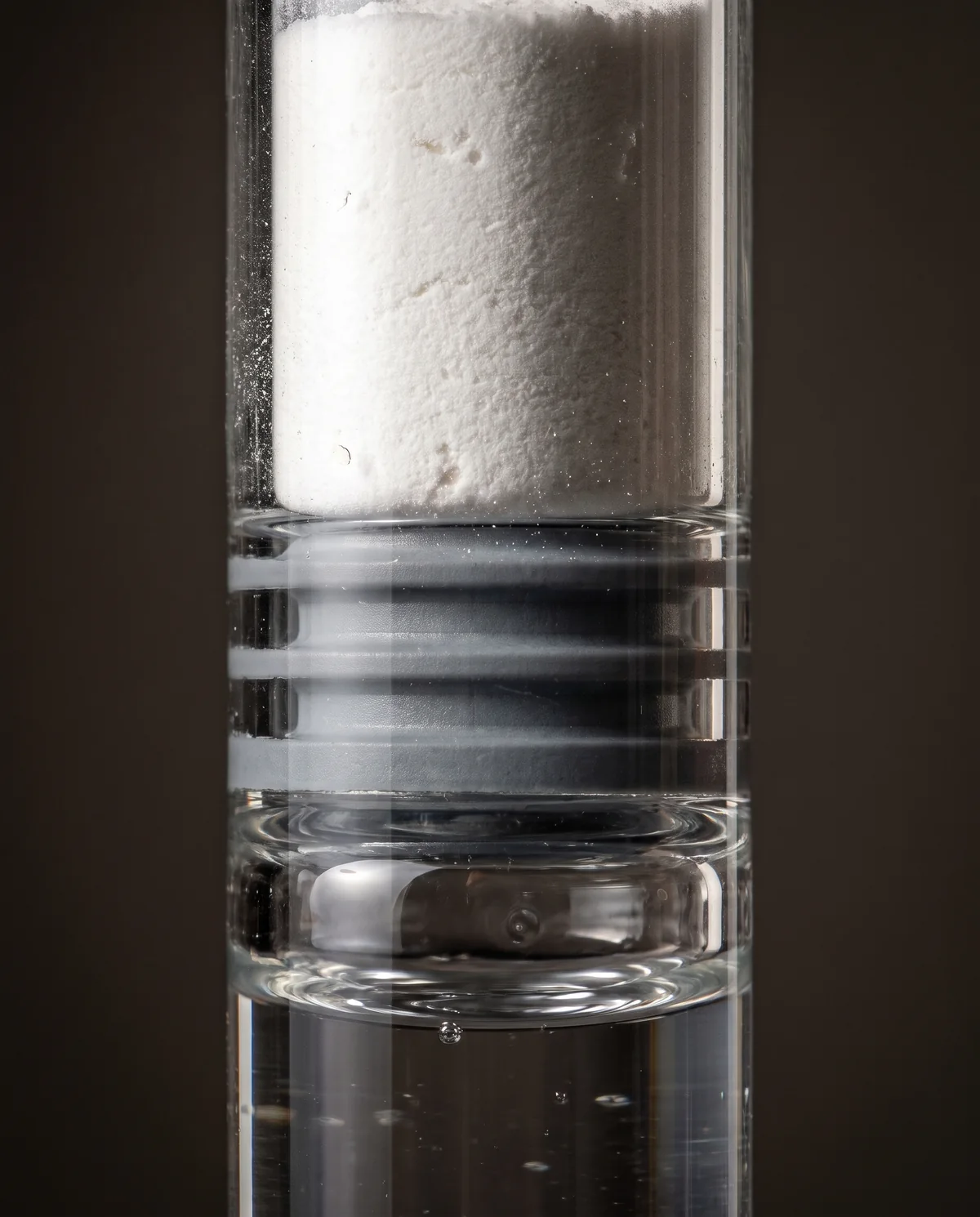
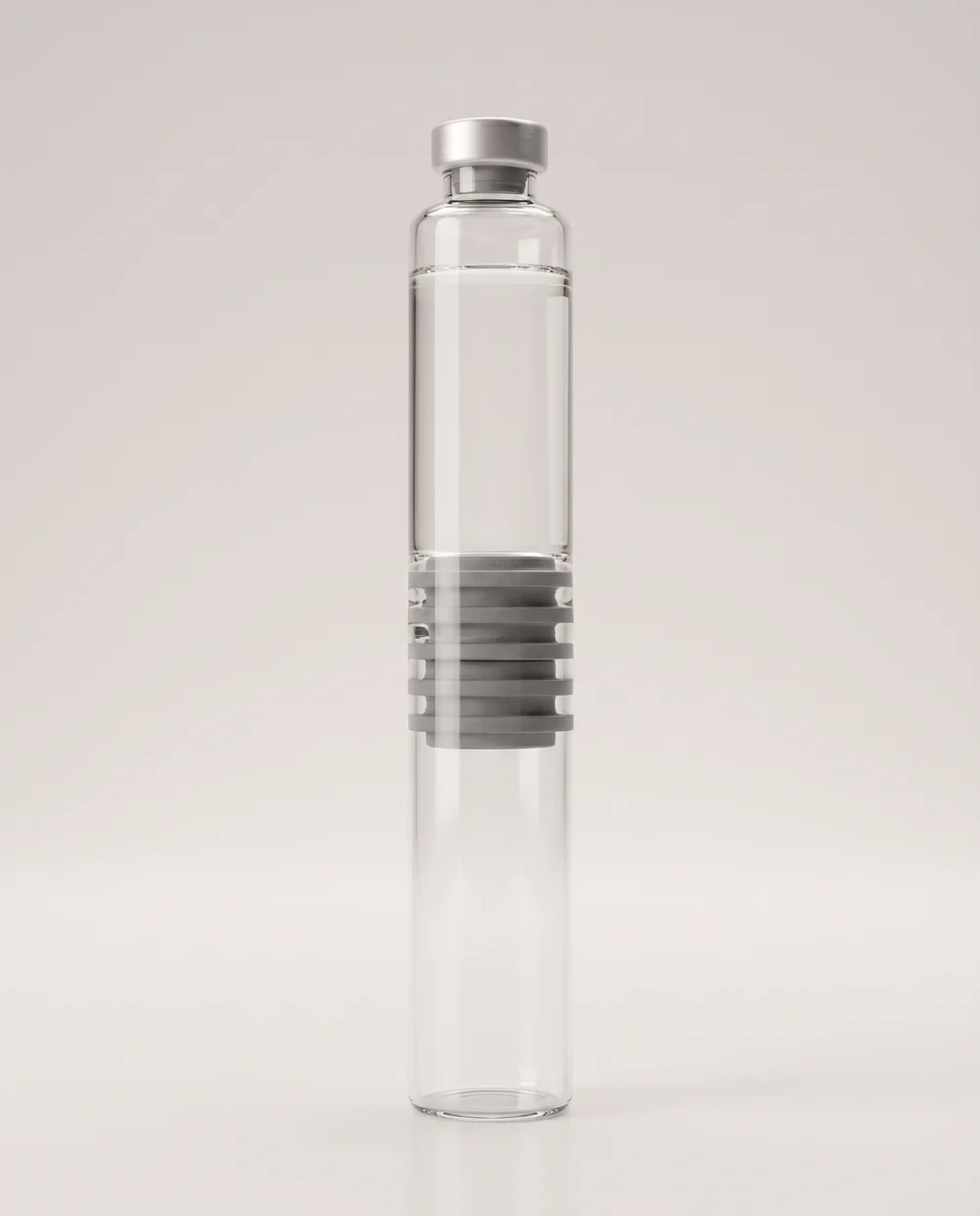
A blend pen carries two or more actives in the same front chamber of a dual-chamber cartridge. The actives go into the cartridge together, so the proportions between them are fixed at the fill rather than mixed at the bench. When the pen is twisted, the sterile water dissolves all of them at once, and the solution is 1 mL like every other Dual Chambers pen.
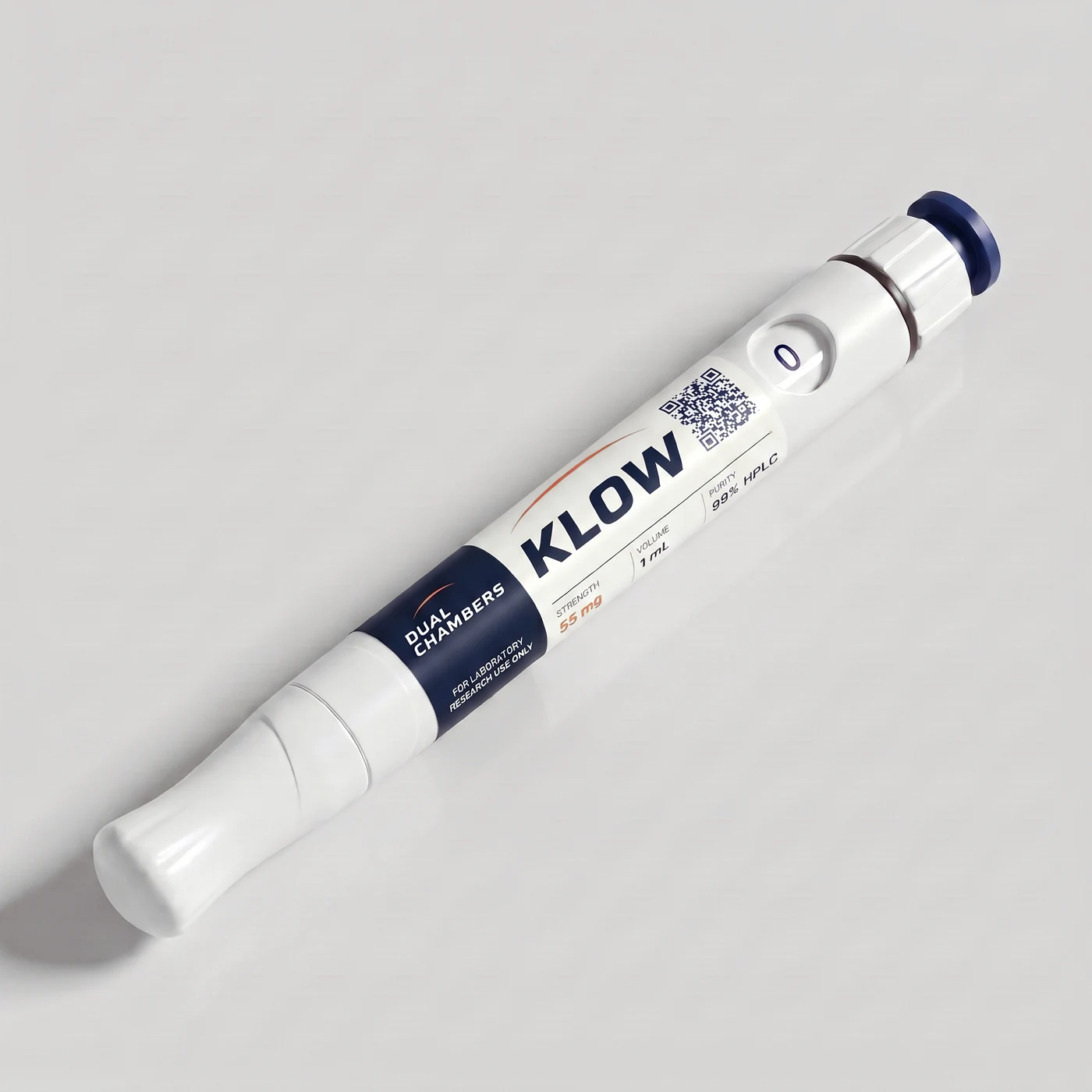
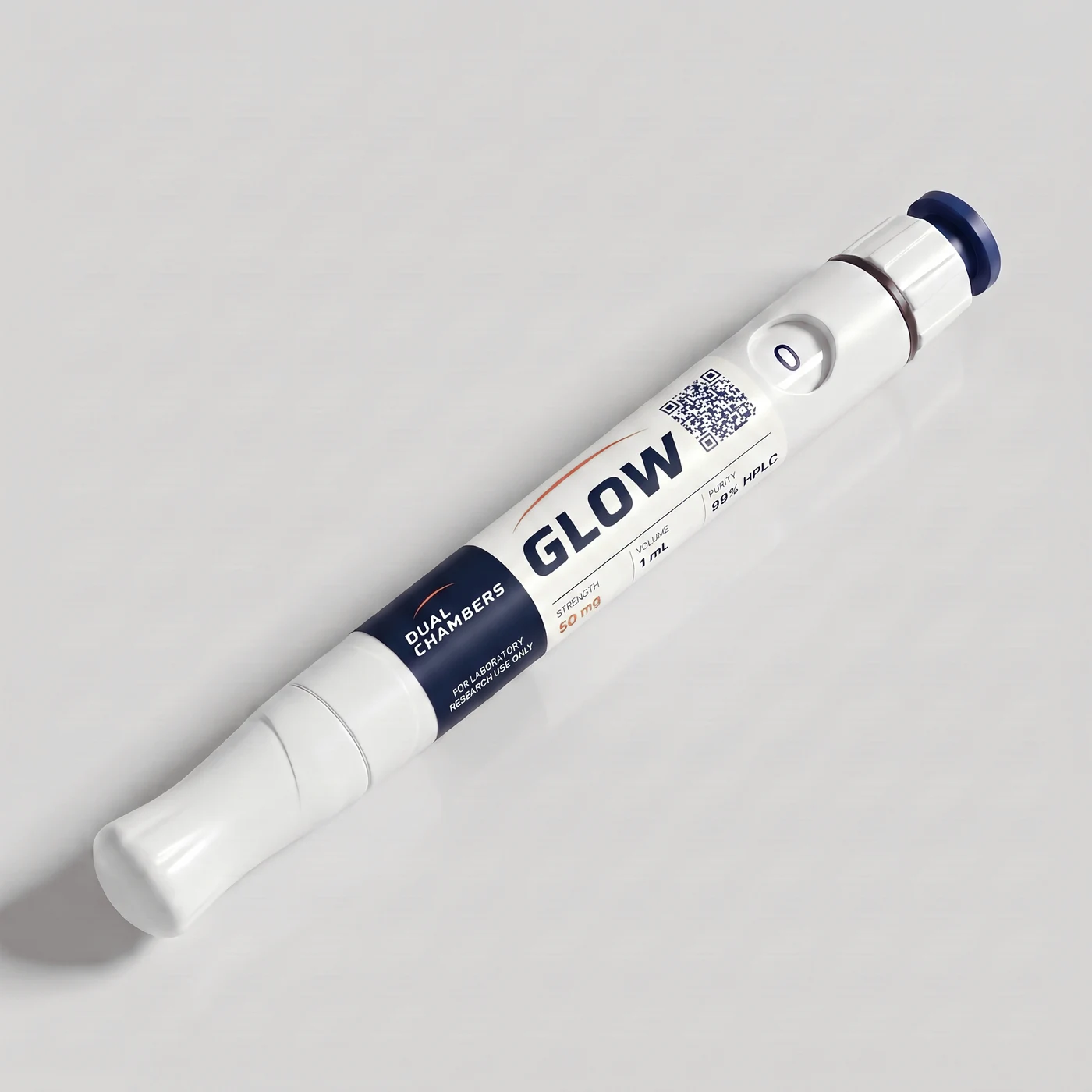
The strength printed on a blend is the total of its actives. KLOW is 55 mg total; GLOW is 50 mg total.
Why fill at one ratio
The alternative to a blend is to source each peptide separately and combine them in the lab. That works, and it lets you choose any proportion. It also multiplies the bench work. A fixed-ratio blend is built for study designs that run the same group of peptides together repeatedly.
- Consistency between preparations. Every pen of the same blend carries the same proportions, because the ratio was set when the lot was filled, not worked out each time.
- Fewer handling steps. One pen and one twist replace several vials, several reconstitutions and a combining step, each of which is a place where preparations can differ.
- One lot, one record. All the actives in a pen share a lot number, so the material in a study can be traced to a single lot and its report.
- Each active stays dry until the twist. In a dual-chamber pen the whole blend is lyophilized until you mix it.
The trade-off
A fixed ratio is fixed. If a protocol needs to vary the proportion of one peptide, or run one peptide on its own as a control, single-peptide materials are the better fit. Many designs use both: the blend for the combined arm and single peptides for comparison. In the Dual Chambers catalogue, BPC-157 and GHK-Cu are each also available on their own, and BPC-157 and TB-500 are available together as a two-active blend.
KLOW: four actives
KLOW is a four-peptide research blend: BPC-157, TB-500, GHK-Cu and KPV, in one cartridge, 55 mg total. It is built for study designs that run these reference materials together.
- BPC-157 is a 15 amino acid synthetic peptide based on a sequence identified in gastric juice, used as a reference material in tissue and connective tissue research.
- TB-500 is a synthetic fragment of thymosin beta 4.
- GHK-Cu is a copper-binding tripeptide, glycyl-L-histidyl-L-lysine complexed with copper, and a long-standing reference material in collagen and extracellular matrix research. It carries a metal ion as part of the molecule.
- KPV is a tripeptide of lysine, proline and valine.
GLOW: three actives
GLOW is a three-peptide research blend: BPC-157, TB-500 and GHK-Cu, in one cartridge, 50 mg total. It is used in collagen and extracellular matrix research, where the three are studied as a group rather than one at a time. Put simply, GLOW is KLOW without the KPV.
What a blend asks of testing
Testing a blend is more work than testing a single peptide, because every active has to be accounted for in the same sample. The three tests described in identity, purity and endotoxin all still apply, with some differences:
- Identity. Each active has its own molecular mass, so a mass spectrum of a blend should show each of the expected masses. A missing mass is a missing active.
- Purity and composition. In HPLC, each active comes out of the column at its own time and appears as its own peak. A single "main peak" percentage does not describe a blend; a blend report needs to show the actives separately.
- The metal ion. GHK-Cu is a copper complex, so the free peptide and the copper-bound form can behave differently on some methods. Reports should be read with that in mind.
- Endotoxin. One endotoxin result covers the whole blend, because it is one solution.
As with any report, the first check is that the lot on the report matches the lot on your box. Our guide to reading a peptide lab report covers the rest.
Handling a blend pen
A blend pen is handled like any other Dual Chambers pen. Before the twist, keep it dry, out of direct light, and do not freeze it. After the twist, keep it at 2 to 8 °C and do not freeze it. Twist it only when you are ready to use it in your work: once the water has crossed the bypass, all of the actives are in solution together. The full detail is in storing a dual-chamber pen before and after the twist.
Common questions
Can I change the ratio inside a blend pen?
No. The proportions are set when the pen is filled. For a different ratio, combine single-peptide materials at the bench.
Is the strength the amount of each active?
No. The strength on a blend is the total of all its actives: 55 mg for KLOW, 50 mg for GLOW.
Where are the lab reports for blends?
On the lab reports page, alongside the single-peptide pens, as reports are released.
KLOW and GLOW are supplied as research materials only, for laboratory research use. We make no claims about their effects in people. Not for human or veterinary use.
Dual Chambers products are not for human or veterinary use, and nothing in this article is an instruction for use in people or animals. Questions about a pen or a lab report: support@dualchambers.com.