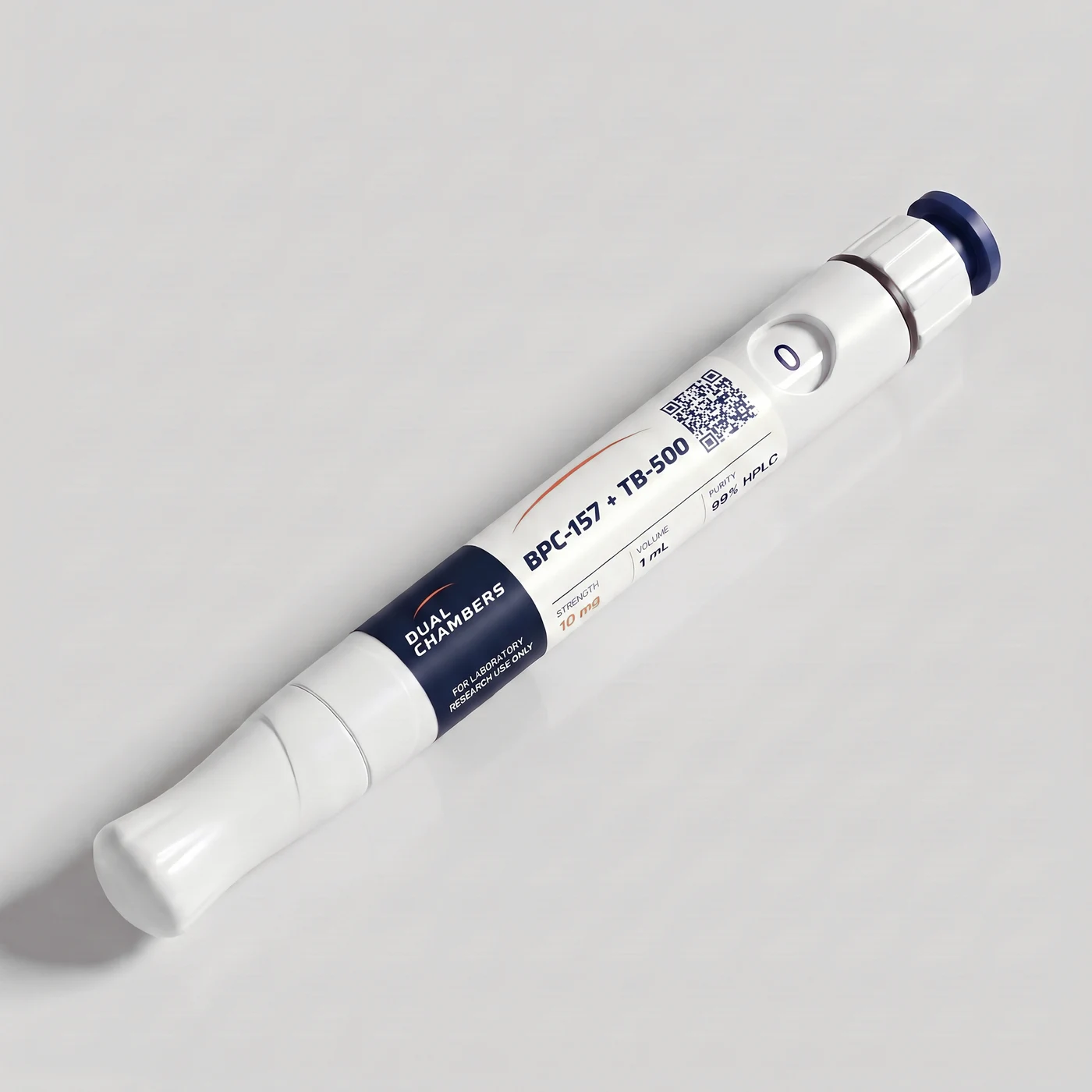
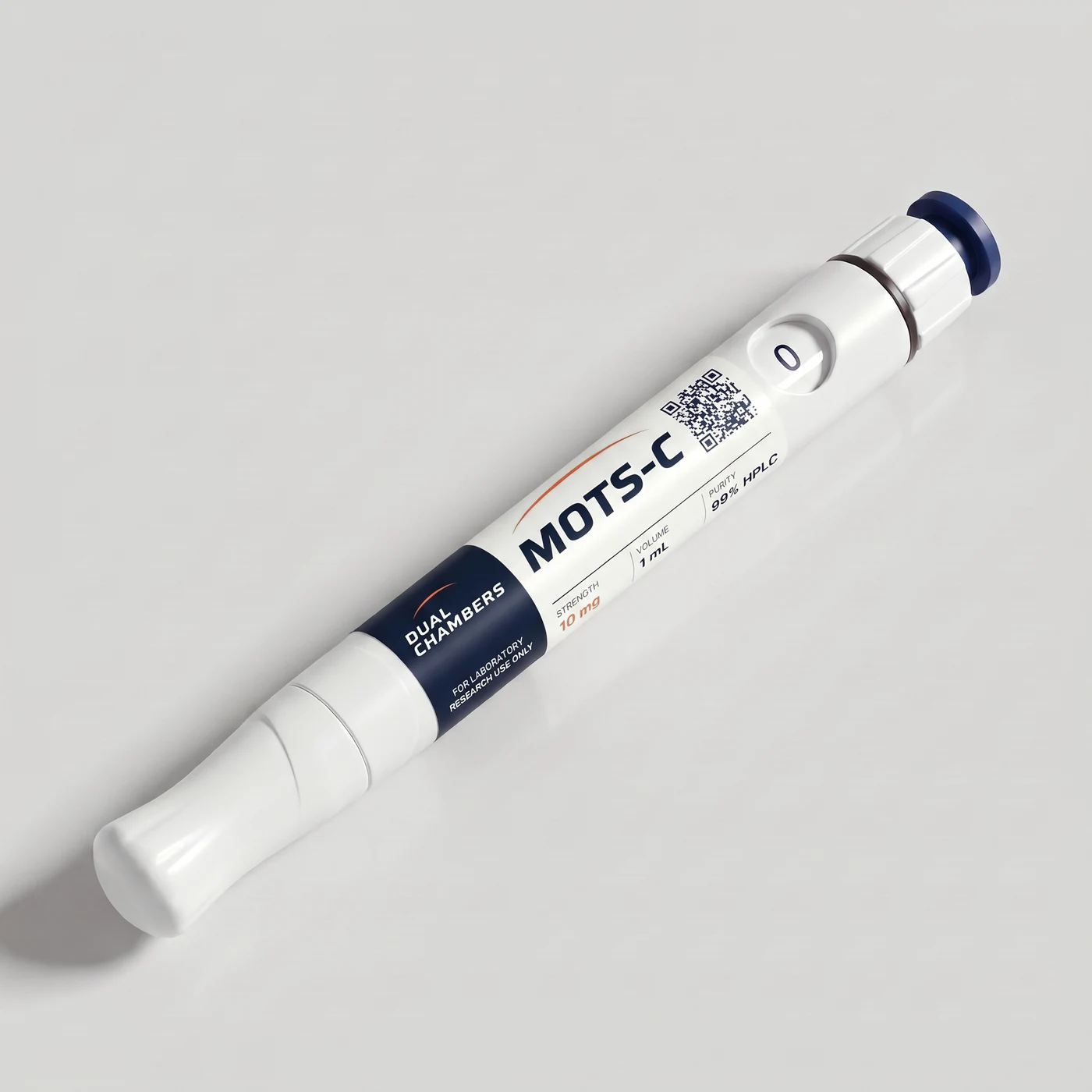
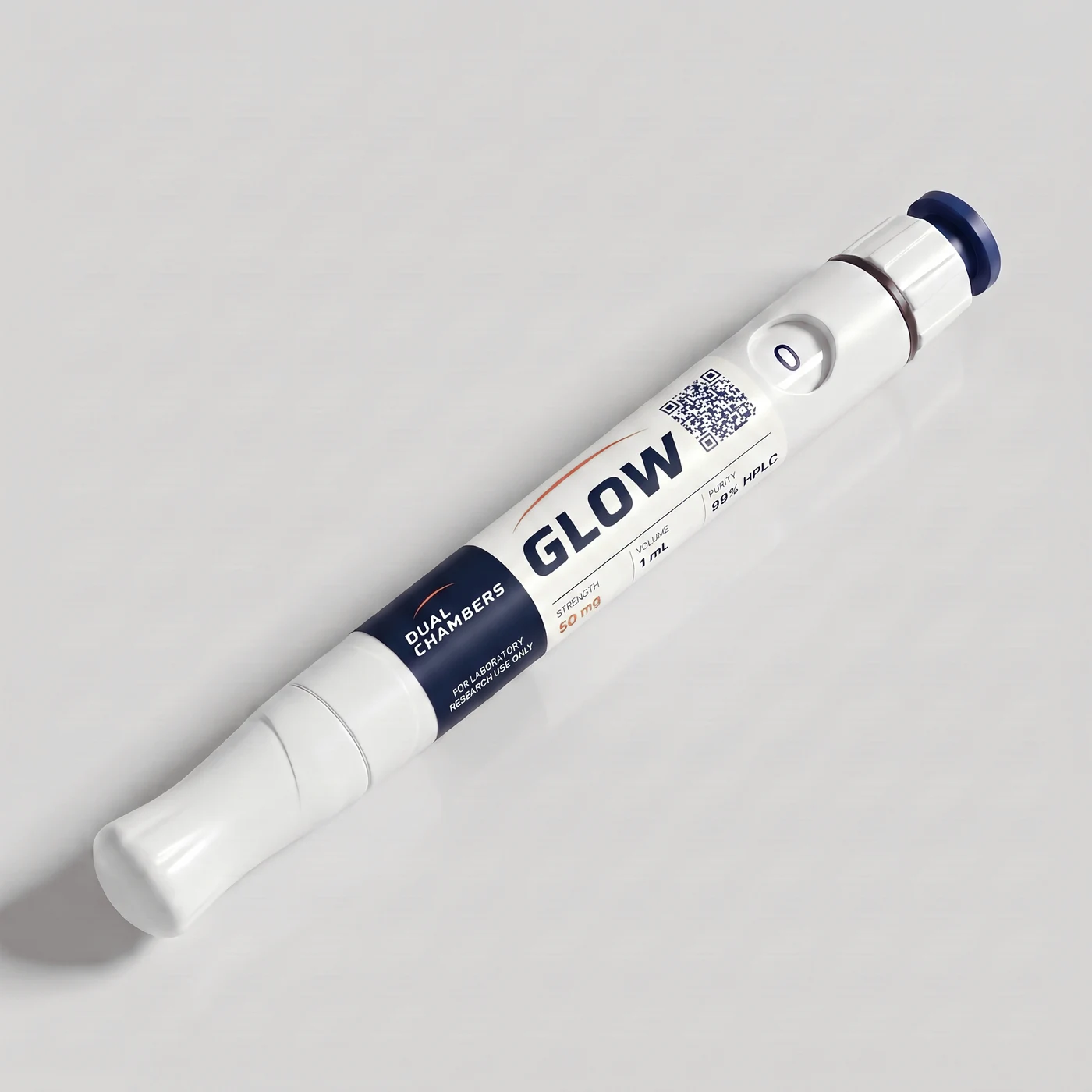
Why the water is already in the pen
Most research peptides arrive as a dry powder and a separate liquid, and the first job at the bench is putting them together. A dual-chamber pen does that job inside the cartridge. Here is why the water is already in the pen, and what that removes from the work.
Why peptides are shipped dry
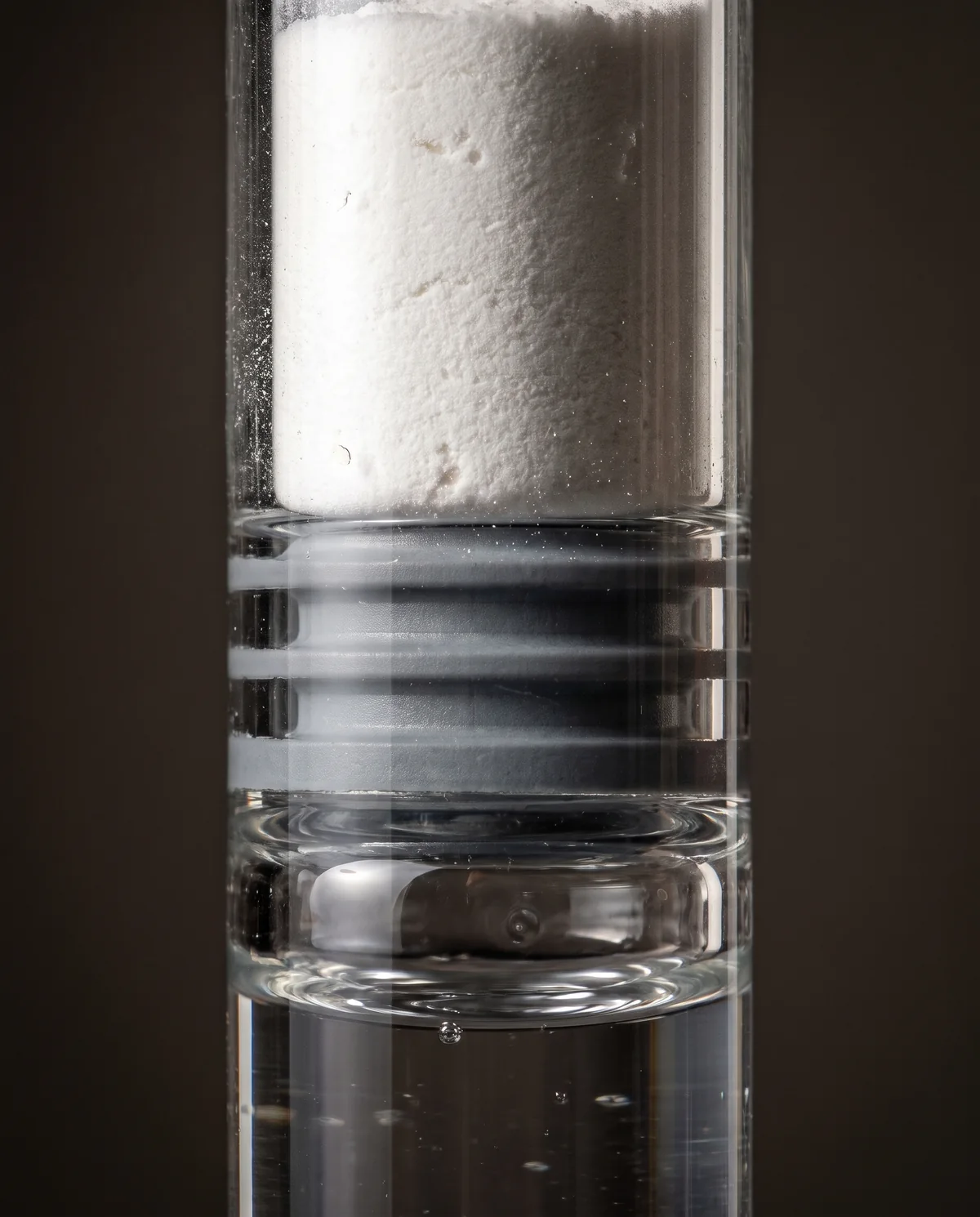
Peptides are usually supplied lyophilized, or freeze-dried. The peptide is dissolved, frozen, and then placed under vacuum so the ice turns straight to vapour without melting. What remains is a dry, porous solid, often called a cake.
The reason is stability. Many peptides are more stable as a dry solid than in solution. In water, they can undergo hydrolysis, oxidation, deamidation and aggregation over time, and how fast depends on the sequence, the temperature and the solution. Removing the water slows those processes, so the material can wait in storage or in transit in a more stable state.
The cost of shipping a peptide dry is that someone has to add the liquid back before it can be used. In most formats, that someone is you.
The transfer step, and what it involves
With a vial and a separate diluent, putting the two together is a small procedure:
- Choose a diluent and a volume, which together set the concentration.
- Measure that volume out.
- Pierce the vial's septum and add the diluent.
- Let the powder dissolve, and record what was done.
None of these steps is difficult, but each one is a place where two preparations can differ. The volume drawn can vary. The diluent is handled in the open before it reaches the vial. The septum is punctured. A concentration worked out at the bench has to be worked out the same way every time to be comparable.
The dual-chamber design takes those steps out of the bench work by doing the measuring at the fill and the transfer inside the cartridge.
Two chambers, one cartridge
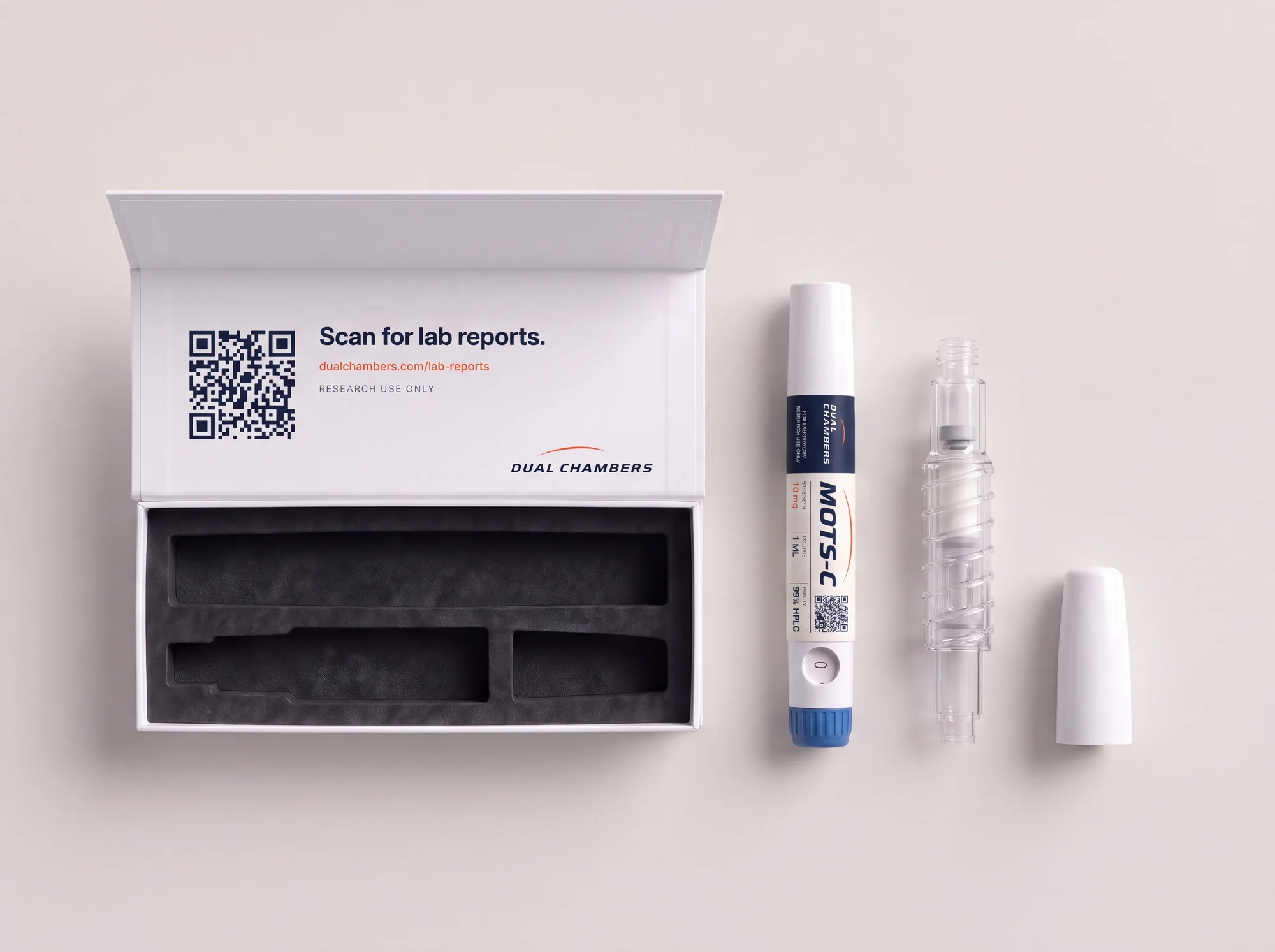
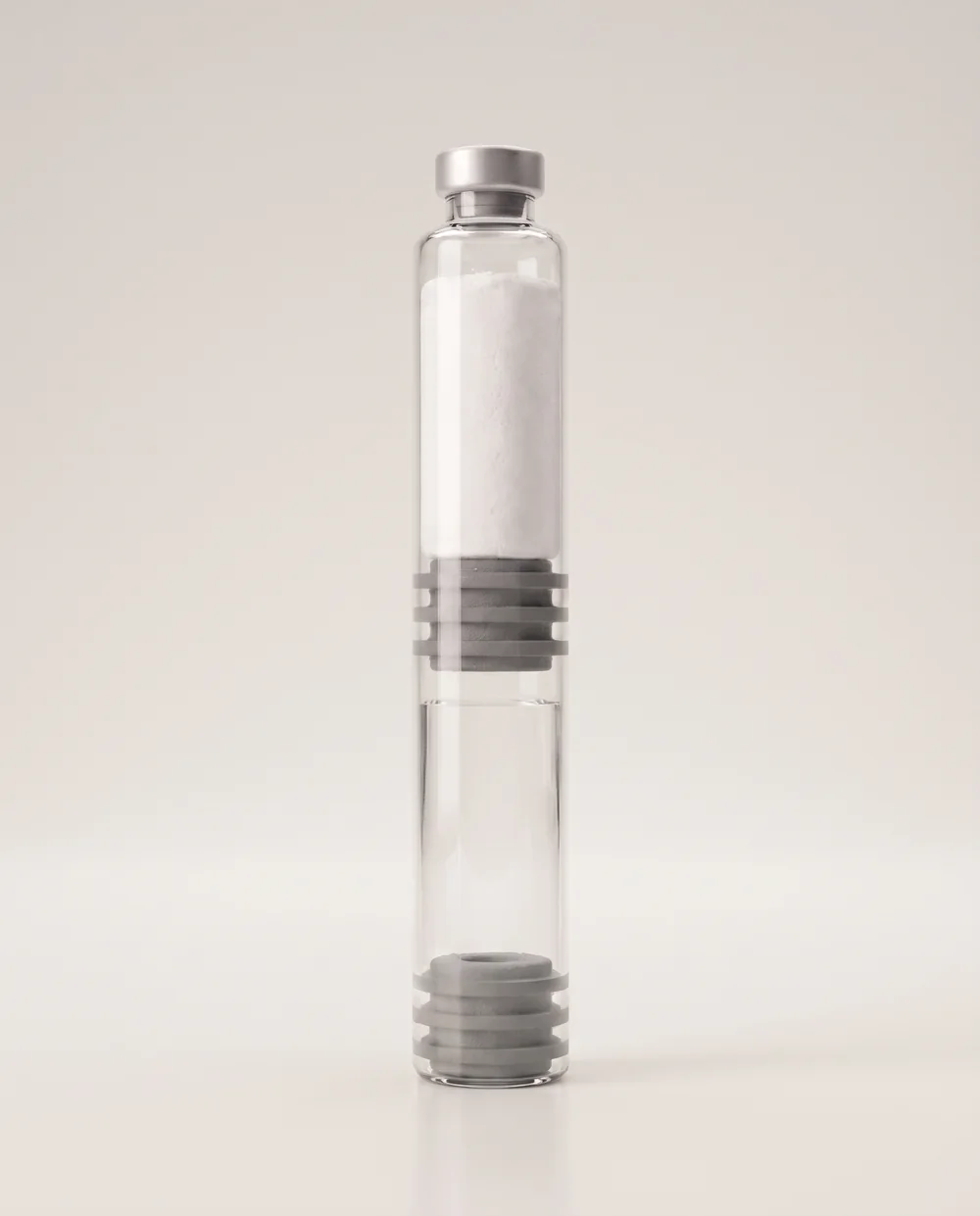
A dual-chamber cartridge is one glass barrel divided into two chambers by a rubber stopper. The front chamber holds the lyophilized peptide. The rear chamber holds sterile water, measured and sealed in when the pen is filled. A plunger closes the back.
The water in the rear chamber is the same volume in every pen, and the peptide in the front chamber is the labeled amount. Every Dual Chambers pen is 1 mL once mixed, so the concentration after the twist is decided before the pen ever leaves the filling line.
The bypass channel
The part that makes the design work is the bypass. A section of the cartridge wall is shaped to create a channel around the middle stopper, but only once that stopper has moved forward into it. Until then, the stopper sits in the plain part of the barrel and seals the two chambers completely.
When you twist the pen, the mechanism pushes the plunger forward. Water cannot be compressed, so the plunger, the water and the middle stopper move together. When the middle stopper reaches the bypass section, the water has a way around it. It flows through the channel into the front chamber and onto the dry peptide, and keeps flowing until the plunger meets the middle stopper and the rear chamber is empty.
That is the transfer step, done by the cartridge itself: no septum, no open-air handling, and no volume to measure.
What the design removes
- The transfer step. The water moves from one chamber to the other inside sealed glass.
- The measuring. The water volume and the peptide amount are both set at the fill.
- The concentration calculation. It is the labeled amount in 1 mL, the same for every pen of that strength.
- A separate diluent to source and store. The water is part of the device.
- Exposure to the air during mixing. Nothing is opened.
What it keeps
The design keeps the main advantage of a lyophilized peptide: it stays dry until you need it. Unlike a pen that is filled with a solution, the clock that matters for a peptide in water starts at the twist, not on the day the pen was filled.
The trade-off
A pen with the water already inside has one fixed concentration. If a protocol needs something different, a vial kit lets you choose the volume yourself. Our comparison of the three formats sets out where each one fits.
The twist is also one way. Once the water has crossed the bypass, the pen is a mixed solution and is stored at 2 to 8 °C. Twist a pen only when you are ready to use it in your work; see storing a dual-chamber pen before and after the twist.
Why sterile water
The second chamber holds sterile water. It stays sealed in the rear chamber until the twist moves it through the bypass channel into the peptide chamber. Because it is filled and sealed with the cartridge, it is never handled at the bench before it meets the peptide.
Common questions
Do I need to add anything to the pen?
No. The water is already inside. There is nothing to draw up or add.
Can I see whether the water has crossed?
Yes. The cartridge holder is clear. Before the twist the water sits behind the middle stopper; after it, the solution is in the front chamber.
Dual Chambers products are not for human or veterinary use, and nothing in this article is an instruction for use in people or animals. Questions about a pen or a lab report: support@dualchambers.com.